A pedestal fan can create a strong breeze beside one crop row while distant plants remain exposed to hot, stagnant air. By the end, you will be able to distinguish air movement from actual heat removal, check whether the fan and openings suit the greenhouse, correct its placement, and troubleshoot uneven cooling before buying more equipment.
Key takeaways
- A strong breeze moves heat but does not lower greenhouse dry-bulb temperature.
- Measure humidity and solar load before choosing fan-only cooling.
- Select fan airflow for the greenhouse path, not catalogue CFM alone.
- Aim the fan across the crop canopy, then check stagnant zones.
A strong breeze is not the same as lower greenhouse temperature
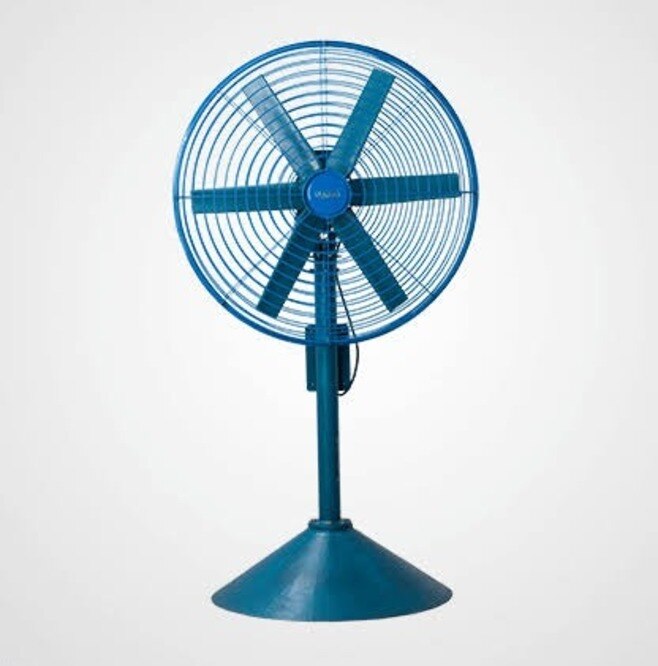
A pedestal mancoolar fan creates a directional jet, not lower greenhouse temperature. It redistributes sensible heat: the moving air strips heat from one zone and carries it elsewhere. Air movement reduces leaf-boundary-layer resistance, improving heat and moisture exchange at the leaf, but it does not lower dry-bulb temperature by itself.
Uneven airflow becomes worse when the jet meets:
- an end wall or corner, causing short-circuiting and recirculation
- benches, dense crops, support posts, or partitions that block the path
- plastic sheeting, screens, shade cloth, or closed ends that prevent air from reaching the far zone
Air velocity can be high at the grille yet fall into a dead zone several metres away. This is why pedestal mancoolar fan problems are often mistaken for a failed motor: free-air force near the fan says little about plant-height airflow across the greenhouse.
Aim for about 0.9–1.3 m/s, or 2–3 mph, through the crop canopy. Measure it at plant height in near, middle, and far zones; do not infer it from motor power or free-air CFM.
Excessive local speed can raise transpiration, increase water demand, dry leaf surfaces unevenly, and stress plants beside the fan while distant plants remain hot. That is the central pedestal mancooler fan for greenhouse cooling problems: circulation without heat removal.
When humidity and solar heat defeat a fan-only cooling plan
A fan cools plants when the air reaching the canopy is cooler than the leaf surface and has somewhere to go. With no heat-removal path, it only circulates air; the greenhouse dry-bulb temperature stays nearly unchanged while transpiration and local leaf cooling increase.
Actual temperature reduction requires one of these systems:
- A defined exhaust path through roof vents, side curtains, or powered outlets
- An evaporative pad with controlled entering air
- A fogger or other water-based cooling system
- Conditioned air supplied into the greenhouse
Wet-bulb temperature indicates the lowest temperature air could approach through evaporation. Wet-bulb depression is the difference between dry-bulb and wet-bulb temperature. Hot, dry air has a larger depression and stronger evaporative potential; high relative humidity leaves little capacity for further evaporation.
During humid monsoon conditions in Bengaluru, incoming air already carries substantial moisture, so pads and foggers remove less heat. Solar radiation through the covering and the crop heat load can then raise internal temperature faster than a fan removes it.
Roof-vent area, side-curtain opening, and the total greenhouse opening area must support the required air changes.
A greenhouse cooling fan in Bengaluru must therefore be assessed against design outdoor dry-bulb temperature, relative humidity or wet-bulb temperature, solar radiation, crop heat load, and required air changes—not the city name. An industrial mancooler fan for greenhouse use cannot restore evaporative capacity lost to humid entering air.
With vents and exhaust openings closed, it can simply recirculate hot upper-layer air.
Choose the fan for the greenhouse airflow path, not its catalogue CFM
Select the unit against delivered airflow at operating static pressure, not catalogue free-air CFM. Insect screens, louvers, evaporative pads, filters, shutters, ducting, and backdraft dampers add resistance; ask for the fan curve and confirm airflow at that pressure.
Before installation, compare:
- Discharge velocity at crop height
- Throw or coverage distance
- Motor rating and voltage
- Speed control range
- Oscillation angle or fixed-direction operation
- Fan diameter, guard depth, and clearance
- Greenhouse length, width, height, benches, partitions, and opening area
A high grille velocity can still leave dead zones. A pedestal mancooler fan for greenhouse cooling problems moves air through the crop; it does not replace an exhaust path or remove solar heat.
| Equipment | Primary job | Main trade-off |
|---|---|---|
| Pedestal circulation fan | Mix and move air locally | Direct airflow, little temperature reduction |
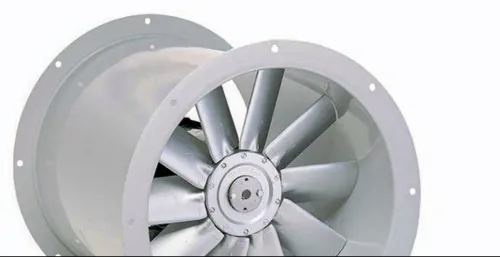
| Greenhouse exhaust or propeller fan | Remove hot air through an inlet path | Installation and inlet-area requirements |
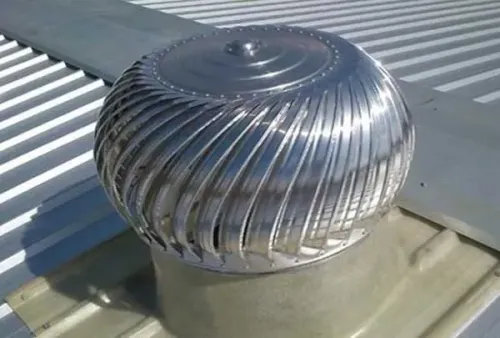
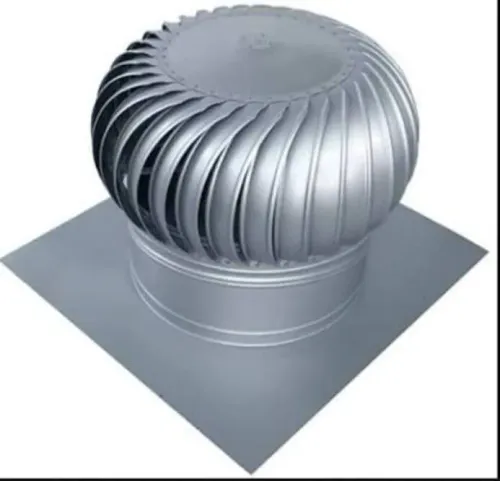
| Roof exhaust fan | Release rising heat | Needs suitable roof openings and weather protection |
| Evaporative cooling pad | Lower entering-air temperature | Water use, humidity, pad resistance |
| Fogger | Add fine water for evaporation | Humidity control and droplet management |
| Shade cloth | Reduce solar load | Lower light, no air exchange |
A poultry house cooling fan belongs to a tunnel-ventilation system with controlled inlets, negative pressure, and specified resistance. Putting it on a pedestal in an open greenhouse creates neither that pressure path nor uniform cooling; it can blast one aisle while leaving other crops stagnant.
Choose between direct movement, exhaust, evaporative cooling, solar-load reduction, water use, humidity control, and installation complexity.
Place the pedestal fan to sweep the crop, not one aisle
Place the fan high enough to move air through the canopy, not skim the crop tops. Aim the discharge along the longest unobstructed travel path, and leave clear space behind the guard so the intake does not starve.
1. Keep the discharge away from corners, end walls, plastic curtains, and solid obstructions. Impingement creates local recirculation while distant plants remain in a dead zone.
2. Align the fan with a planned inlet and outlet: open side curtains, roof vents, or an exhaust opening. Check those openings in their normal operating positions; closed vents turn circulation into hot-air recirculation.
3. Map the first fan’s throw before adding another. Stagger units along the greenhouse or reverse their directions where necessary, rather than aiming every fan down one aisle. Most pedestal mancoolar fan problems come from overlapping jets beside stagnant crop zones.
4. Measure air speed at crop height on a grid covering near, middle, and far zones. Target roughly 0.9–1.3 m/s (2–3 mph) through the canopy, not just a strong reading at the grille.
5. Release smoke near the crop and watch for recirculation, dead zones, and short-circuiting. Adjust fan height, angle, spacing, screens, benches, or partitions before increasing fan size. A larger motor cannot correct a blocked airflow path.
Troubleshoot uneven cooling before adding another fan
Diagnose before adding another fan. A pedestal mancooler fan for greenhouse cooling problems often redistributes heat correctly; the uneven result comes from blocked paths, electrical faults, or excessive jet speed in one zone.
1. Record dry-bulb temperature and relative humidity at crop height and at several heights beside the fan, in the centre, near walls, and at the far end.
2. Inspect intake and exhaust paths. Check screens, vents, evaporative pads, curtains, shutters, and dampers for blockage or closure.
3. Verify fan direction, speed, oscillation, voltage at the motor terminals, and operation under load. A motor that slows under load cannot deliver its catalogue airflow.
4. Inspect dirty blades or guards, a blocked intake, incorrect rotation, abnormal vibration, rattling guards, motor overheating, a damaged capacitor, worn bearings, loose fasteners, and belt condition where fitted.
5. Measure air velocity at plant height across near, middle, and far grid points. Compare it with the 0.9–1.3 m/s canopy range; a high local jet can stress nearby plants while distant leaves receive almost no movement.
| Reading | Likely finding | Corrective action |
|---|---|---|
| High speed beside fan, low speed far away | Short-circuiting or obstruction | Re-aim, clear the path, or adjust openings |
| Hot air everywhere | Closed exhaust route | Open roof vents or side curtains and coordinate exhaust |
| Low speed at all points | Fault, resistance, or undersized fan | Check pressure, motor performance, and selection |
Adjust fan height, angle, spacing, benches, partitions, and openings before buying an industrial mancooler fan for greenhouse use. Vayuvents Private Limited can help when the decision requires airflow mapping, static-pressure selection, motor controls, exhaust coordination, or a combined circulation and evaporative system.
Related products
 | Exhaust Fan , Poultry Exhaust Fan, Greenhouse Exhaust Fan move and refresh the stagnant air in your greenhouse or building to create a healthier and... View product → |
 | Industrial Man-cooler Fan - High Quality, Durable and Long-Lasting The purpose of an industrial man cooler fan is to keep workers in a cool... View product → |
Frequently asked questions
Why does a pedestal mancoolar fan fail to cool a greenhouse evenly?
It produces a directional jet that redistributes heat instead of lowering air temperature. Crop rows, glazing, structures, and poor inlet and outlet paths create stagnant zones and uneven airflow.
When is a fan-only greenhouse cooling plan inadequate?
Fan-only cooling is inadequate when solar heat gain and humidity keep leaf and air temperatures high. You need a defined exhaust path and, where conditions allow, evaporative cooling or another heat-removal method.
How should you choose a fan for greenhouse cooling?
Choose it for the greenhouse airflow path: required air changes, inlet and exhaust resistance, throw distance, crop height, and operating noise. Do not select it from catalogue CFM alone.
Where should you place a pedestal mancoolar fan in a greenhouse?
Place it to sweep air across the crop canopy and toward an exhaust or ventilation opening. Avoid aiming along one aisle, at a wall, or directly at a single crop section.
What should you troubleshoot before adding another greenhouse fan?
Check fan direction, blade and guard cleanliness, inlet and outlet openings, obstructions, short-circuiting, canopy-level airflow, humidity, and temperature at several points.
Related products
 | The overpowering heat in an industrial work place can bring down the efficiency and productivity of workers. View product → |
 | Mancooler has longer life and durability to work in extreme Industrial Conditions. View product → |
 | Resistor Load Bank Cooling Fan Resistor Load Bank Cooling Fan During an electrical utility outage, mission critical facilities, such as hospitals, data center, and certain financial institutions continue to... View product → |
 | The efficiency of Conventional Ventilators is dependent on wind velocity. View product → |