A basement parking fan and a roof-mounted exhaust fan usually solve different parts of the ventilation problem: one moves air through the parking level, while the other creates a discharge path outdoors. You will be able to compare their actual duties, test whether a substitution is technically viable, and identify the controls and fire-safety provisions that a safe design still needs.
Key takeaways
- Compare pressure, airflow and duty—not catalogue airflow alone.
- Use a roof fan for exhaust removal only when the system design supports it.
- Control normal exhaust ventilation with carbon monoxide sensors and staged operation.
- Treat smoke-control ventilation as a separate fire-engineered system.
What job does each fan perform in a car park?
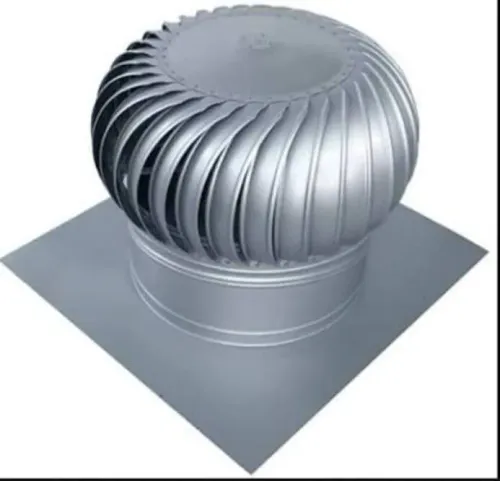
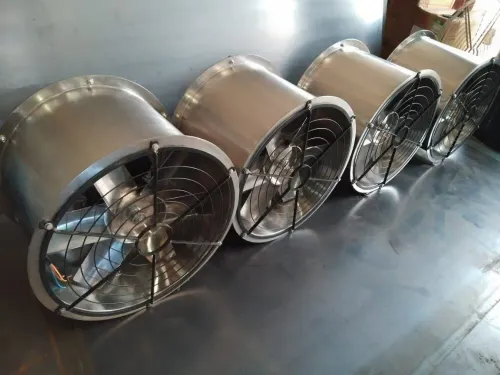
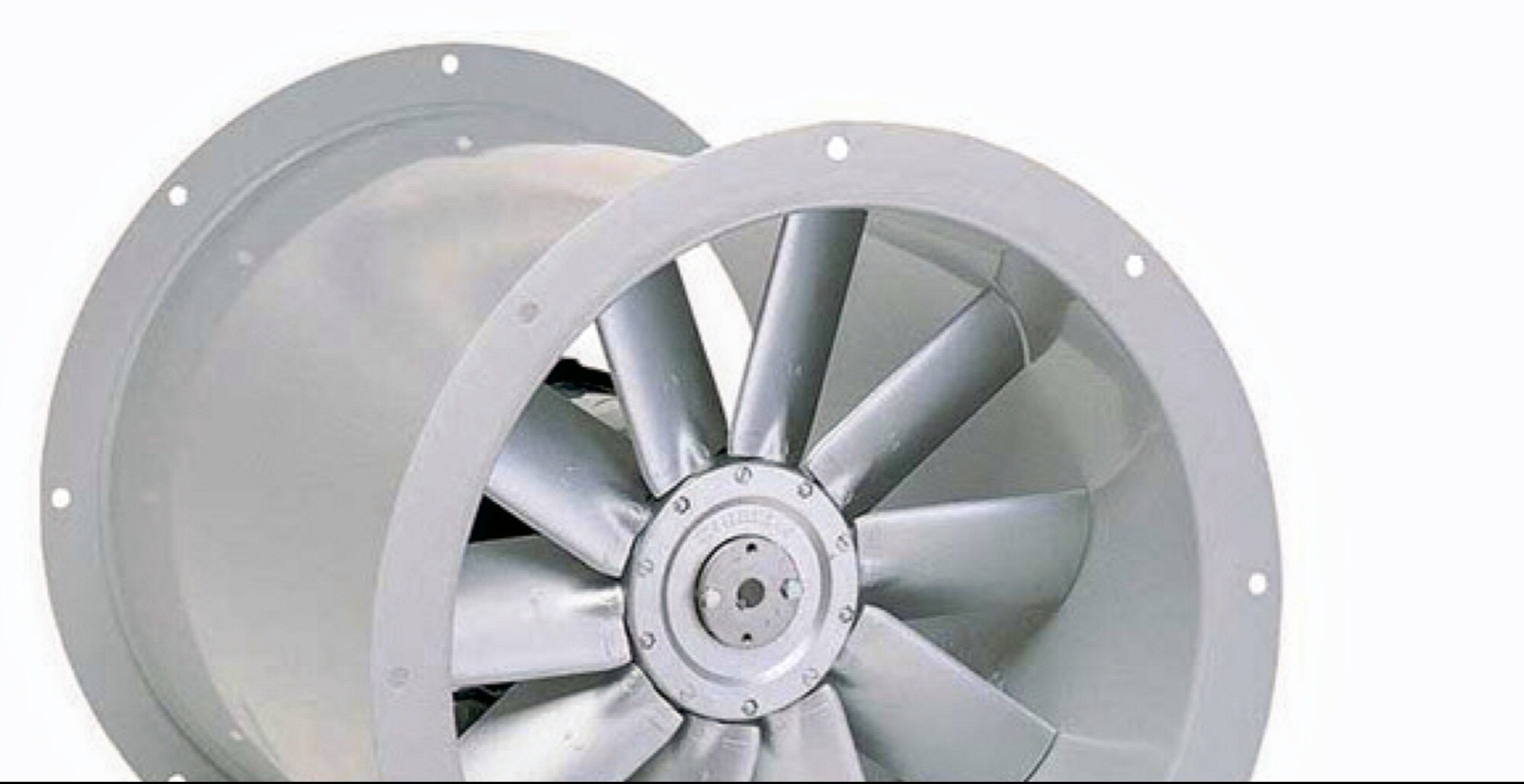
A car parking fan and an electric roof top ventilator are not automatically interchangeable: one usually circulates air across the parking level, while the other removes air from the building.
A car parking ventilation fan, especially a jet or impulse fan, creates thrust that moves air toward an exhaust point; it does not discharge air outdoors by itself.
| Equipment | Primary job | Contaminant outcome | Main design basis |
|---|---|---|---|
| Car parking fan | Move air through the parking area | Redistributes carbon monoxide, nitrogen dioxide or smoke unless an exhaust route exists | Thrust in newtons, fan orientation and clear airflow paths |
| Electric roof top ventilator | Extract air through a roof opening or connected duct | Removes contaminated air when outdoor replacement air can enter | Airflow, static pressure, duct resistance and discharge location |
Replacing roof exhaust capacity with car parking fans alone can create recirculation. Polluted air travels around the basement but remains inside it, particularly when ramps, walls, beams or parked vehicles block the intended flow path.
A roof ventilator can suit a car park with vertical shafts, duct branches and a defined discharge point. Jet fans can reduce ductwork and improve distribution in a large open garage, but they still need separate exhaust equipment and replacement-air openings.
Treat normal vehicle-exhaust removal and smoke control as separate duties; a normal-duty fan is not a smoke-exhaust fan unless its tested temperature rating, power supply and controls meet the required approval standard.
How do you compare fan duty instead of catalogue airflow?
Equivalence depends on duty at the operating point, not the largest airflow printed in a catalogue. Compare delivered airflow in m³/h at the required external static pressure in Pa for a parking exhaust fan; a roof unit loses capacity through ducts, bends, grilles, dampers, filters and the discharge outlet.
| Figure or condition | Roof-top exhaust fan | Parking or jet fan |
|---|---|---|
| Main performance measure | Delivered airflow in m³/h at system pressure | Thrust in newtons and induced airflow |
| Fan curve | Shows airflow against external static pressure | Shows thrust, airflow and pressure by operating point |
| Motor comparison | Input kW, efficiency and starting current | Input kW and efficiency for the stated thrust |
| Sound | Sound level at occupied or roof locations | Sound level where occupants and neighbours hear it |
| Site effect | Duct length, fittings, shaft and discharge resistance | Beams, columns, ramps, soffits and dead-end bays |
A motor’s horsepower proves nothing by itself. Check the fan curve at the actual duty, then record motor input, efficiency, sound level and electrical starting requirements.
- For extraction, verify that delivered airflow meets the required air changes after every duct loss.
- For impulse movement, verify thrust in newtons along the intended path, not the fan’s free-air m³/h.
- Map parking geometry: obstructions can create stagnant pockets even when the fan meets its rated duty.
- Confirm that replacement air can enter at the same rate; a sealed basement creates negative pressure and reduces actual exhaust.
When can a roof fan replace part of a parking ventilation system?
A roof fan can replace the exhaust portion of a parking system only when it removes the calculated contaminant load and has a complete path for replacement air. It cannot replace jet-fan thrust that moves air around columns, ramps, and dead zones.
1. Confirm the duty: calculate required exhaust airflow from basement volume, target air changes per hour, vehicle use, and normal CO and NO2 limits. Check smoke-exhaust duty separately; normal ventilation figures do not prove fire performance.
2. Check resistance: plot the electric roof top ventilator on its fan curve at the required m³/h and external static pressure. Include duct friction, bends, filters, grilles, shafts, fire dampers, roof terminals, and every branch loss.
3. Prove air can enter: measure open-ramp area and replacement-air capacity. A powerful extractor operating against sealed openings creates low pressure, reduces delivered airflow, and leaves pollutants trapped behind walls or parked vehicles.
4. Walk the airflow path: map columns, beams, ramps, storage cages, shafts, and branch ducts, then confirm discharge location. Keep exhaust away from outdoor-air intakes and neighbouring windows; a shaft or duct branch is suitable only if its area, fire rating, access, and resistance match the duty.
5. Approve the roof installation: for roof ventilation equipment in Bengaluru, check monsoon rain ingress, wind exposure, corrosion, roof waterproofing details, vibration, and acoustic impact on nearby buildings. Ask Vayuvents Private Limited to document these checks rather than accepting motor horsepower as equivalence.
If these checks pass, the roof fan can replace a defined exhaust branch or capacity. It cannot replace circulation fans where the layout needs local air movement.
How should normal vehicle-exhaust ventilation be controlled?
Normal vehicle-exhaust ventilation should use automatic demand control, not fan operation based on average gas readings alone. CO and NO2 sensors detect local conditions, while the control panel starts a car parking fan or parking exhaust fan at staged speeds according to approved setpoints.
Use one coordinated sequence:
- Place sensors across occupied zones, near ramps and likely traffic queues; one sensor at the discharge point cannot represent the whole basement.
- Start the first fan stage when CO or NO2 reaches its setpoint, then add stages as concentrations rise.
- Run a timed purge cycle after opening, closing, or a prolonged low-traffic period so cold-start emissions and trapped pockets are cleared before normal operation.
- Check sensor status continuously. A failed, disconnected, overdue, or implausible sensor should generate an alarm and put ventilation into a defined safe mode, such as increased fan operation, rather than silently reporting clean air.
- Provide a labelled manual override at the control panel for testing, maintenance and an incident response. Record who used it and when.
Review cold starts, traffic peaks and airflow coverage during commissioning. A low daily average can hide a short, dangerous concentration spike or a dead zone behind parked vehicles; it cannot replace timed observations, sensor checks and confirmation that outdoor replacement air reaches every occupied area.
What changes when the system must control smoke during a fire?
Fire mode changes the design objective: normal ventilation controls vehicle pollutants, while smoke control must preserve smoke-clearance zones and tenable escape and firefighting routes. A car parking fan that circulates air is not an exhaust system, and an electric roof top ventilator is not a smoke fan merely because it discharges through the roof.
A jet fan must create the specified airflow pattern toward the smoke exhaust point; its thrust in newtons matters more than motor horsepower. Check these items before treating either fan as a fire-system component:
- Jet-fan thrust, spacing, direction and obstruction effects against the approved smoke model.
- Smoke-clearance zones, including the height and duration of the clear layer required for evacuation and firefighting.
- Fire-rated ducts, dampers, supports and discharge outlets where the system uses ducted extraction.
- Emergency power capacity, automatic starting, cable survival and standby arrangements for the required operating period.
- Firefighter controls: a labelled fireman’s override, local or remote manual control, status indication and a cause-and-effect sequence.
- Temperature classification under EN 12101-3, recorded as a temperature-and-time rating supported by test evidence.
- Approval documentation: equipment test certificates, fan curves or thrust data, smoke calculations, installation drawings, control logic and acceptance by the fire and building authorities.
If the manufacturer cannot produce the EN 12101-3 classification and tested operating documentation, keep the unit in the normal-ventilation category. Do not substitute it for a smoke-extract fan.
Frequently asked questions
What job does each fan perform in a car park?
A car parking fan circulates and directs air across the parking level, while an electric roof top ventilator extracts air from the building. They are not interchangeable without checking the complete airflow path and system duty.
How do you compare fan duty instead of catalogue airflow?
Compare airflow at the required static pressure, fan curve, sound level, power input, operating temperature, duty point and control range. Free-air catalogue airflow does not show how the fan performs against ductwork, grilles, filters or discharge resistance.
When can a roof fan replace part of a parking ventilation system?
A roof fan can replace part of the system when it provides the required parking exhaust airflow at the installed pressure, has a suitable intake and discharge path, and works with make-up air, controls and access requirements.
How should normal vehicle-exhaust ventilation be controlled?
Use carbon monoxide sensors to stage or modulate the parking exhaust fan, with setpoints, alarm levels, minimum ventilation, manual override and fault indication defined by the design. Balance exhaust airflow with deliberate make-up air.
What changes when the system must control smoke during a fire?
Smoke control requires a separate fire-engineered design covering smoke movement, tenability, extraction zones, fire-rated equipment, temperature duty, power supply, activation, testing and firefighter controls. A normal parking exhaust fan is not automatically suitable.