A roof turbine and a tunnel fan solve different ventilation problems: one provides weather-dependent extraction, while the other creates a controlled, directional airflow path. By the end, you will be able to match each system to a building or process, compare capacity on a fair duty basis, and identify conditions where neither is suitable without source capture or air treatment.
Key takeaways
- Choose turbo ventilators for low-energy general heat and stale-air relief.
- Choose tunnel fans when you need a defined, high-volume airflow path.
- Check wind, roof height, openings, and process heat before selecting equipment.
- Compare delivered airflow, controls, installation, maintenance, and operating cost.
How the two ventilation systems move air
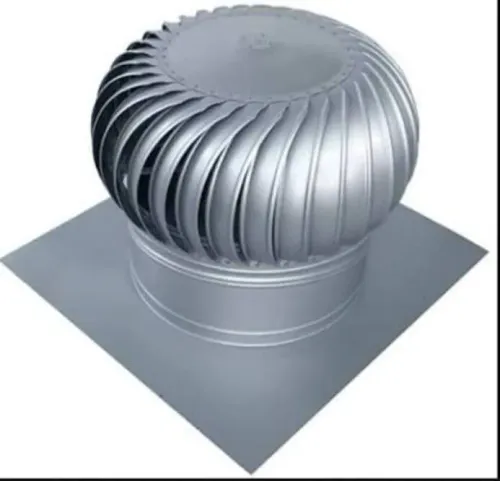
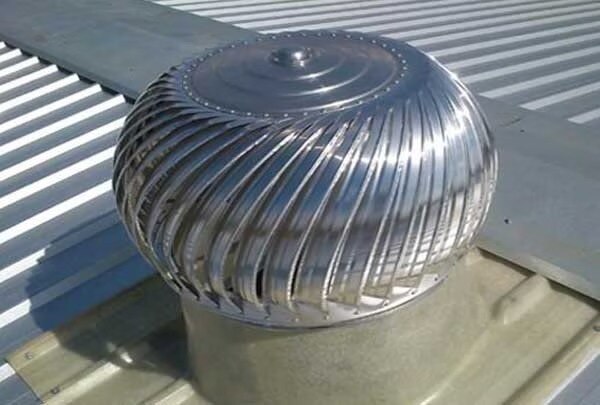
A turbo ventilator compared with tunnel fan equipment differs first in how it creates airflow. A roof-mounted turbo ventilator uses wind-driven rotation and buoyancy to draw warm or stale air upward and discharge it through the roof.
Its airflow changes with wind speed, the indoor–outdoor temperature difference, inlet resistance, and leakage through doors, joints, and other openings.
| System | Operating principle | Control and trade-off |
|---|---|---|
| Turbo ventilator | Wind and buoyancy drive roof-level extraction | Low electrical consumption, but limited control and no guaranteed airflow independent of weather |
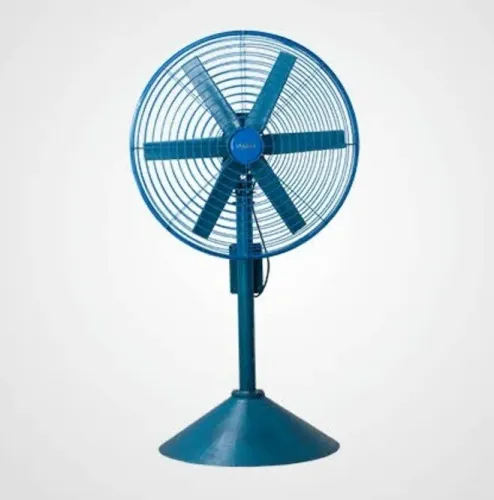
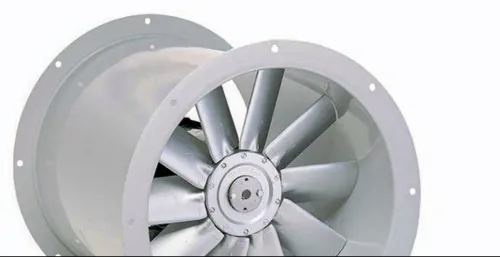
| Tunnel fan | An electric motor drives an axial impeller that pushes high air volume longitudinally | Fans can be staged, speed-controlled, interlocked with sensors, and selected for a stated duty point |
A tunnel fan therefore moves air along a defined path, while a passive turbo ventilator provides general upward relief. That distinction matters in a long enclosure: the tunnel fan can establish airflow from an inlet side to an exhaust side, whereas the turbo ventilator does not set a predictable direction through the occupied zone.
Do not assume a product called a turbo ventilator is passive. If it includes a motor, evaluate it as a powered roof extractor or fan, using its airflow and pressure duty rather than its name.
The practical test in a turbo ventilator versus tunnel fan decision is simple: do you need broad heat and stale-air relief, or a predictable volume and direction of air?
Where tunnel fan ventilation works—and how the airflow path is built
Tunnel fan ventilation works where a long, occupied or heat-producing space needs air to travel from controlled inlets to powered axial fans. Install fans at one end, or along one wall, and place sized, controllable inlet openings at the opposite end or opposing wall. This creates longitudinal airflow instead of simply stirring air.
Typical applications include:
- Poultry houses and livestock housing, where air speed must suit animal age, stocking density, and weather.
- Greenhouses, where directional movement supports heat and humidity control.
- Long workshops and factories, where workers and machinery occupy a defined airflow path.
- Tunnels and underground spaces, where natural movement is restricted.
- Enclosed production areas, where process heat requires predictable air movement.
Keep the occupied or heat-producing zone between the inlets and fans. Open doors, gaps beside fans, badly distributed inlets, and short-circuit routes let air reach the fans without crossing the space, so rated airflow produces weak local movement where it matters.
Higher total airflow does not guarantee better conditions. Check draught, high air velocity, worker or animal exposure, fan noise, and temperature uniformity at occupied positions; a powerful system can cool one area while leaving another stagnant.
This differs from general roof heat relief in a warehouse or workshop. Roof extraction may remove accumulated hot air without requiring a defined horizontal flow path, while tunnel ventilation depends on controlled direction through the occupied space.
When a turbo ventilator fits the building—and when weather defeats it
A turbo ventilator fits a building when heat and stale air can leave through the roof and replacement air can enter deliberately. Use this site checklist before counting turbines:
1. Measure roof height and estimate the indoor heat and moisture load. High roof spaces with broad heat accumulation suit general relief better than low spaces with concentrated emissions.
2. Record wind exposure, seasonal direction, outdoor temperature, and calm-weather conditions. A turbo ventilator in Bengaluru can help during suitable weather, but hot still days provide little driving force.
3. Map the roof layout, turbine spacing, roof slope, structural obstructions, lights, ducts, and nearby buildings. Poor spacing or blocked discharge paths reduces effective extraction.
4. Identify make-up-air openings: wall louvers, doors, ridge inlets, or continuous eave openings. A relatively airtight building can receive little useful air exchange because replacement air, not turbine size, is the limiting factor.
5. Check whether the occupied zone actually benefits from roof-level relief. Do not use turbo ventilator applications as a substitute for source capture at welding, chemical, furnace, or dust-producing stations.
6. For monsoon-prone sites, specify wind-driven-rain protection, flashing, roof-slope compatibility, corrosion resistance, bird and insect screening, rain ingress during rotation, and safe maintenance access.
Calm weather can reduce airflow to an uncertain level. Passive extraction cannot guarantee minimum airflow or prevent contaminated outdoor air entering through uncontrolled openings during polluted-air events. Confirm the required weather-dependent performance before choosing it.
Compare capacity, control, cost, and maintenance on the same basis
Compare capacity at the same duty point, not by equipment name. Ask for airflow in m³/s or m³/h at stated static pressure or system resistance; fan diameter and free-air volume alone can make a turbo ventilator versus tunnel fan comparison misleading.
| Option | Turbo ventilator | Tunnel fan |
|---|---|---|
| Capacity and control | Weather-dependent extraction; limited control and no guaranteed minimum airflow | Defined longitudinal airflow; staged, speed-controlled, and sensor-interlocked operation |
| Electrical use and cost | Low electrical consumption, but output varies with wind and temperature; installation is usually simpler | Higher electrical consumption, controls, cabling, and inlet work; operating cost follows runtime, speed, tariff, and maintenance |
| Noise and maintenance | Low mechanical complexity; inspect bearings, turbine rotation, seals, screens, corrosion, and rain entry | Motor, belt, shutter, guard, and control maintenance; assess sound at occupied locations |
| Weather and installation | Wind, buoyancy, rain, roof layout, and make-up air determine performance | Predictable only at its duty point; requires structural support, safe access, electrical supply, and controlled inlets |
Use air changes per hour as a space-level check, then add pressure losses from:
- Louvers, filters, ducts, screens, shutters, evaporative pads, transitions, dirty surfaces, and process equipment.
Select tunnel fans at the operating duty point and check worker or animal exposure, draught, noise, temperature uniformity, and local velocity—not total air changes alone. Request operating temperature, efficiency, sound level, corrosion protection, control range, rain performance, and test method.
AMCA 210 covers fan airflow and pressure testing; require a clearly stated, weather-dependent test basis for a passive turbine.
Choose general heat relief or controlled process extraction
Choose a turbo ventilator for broad, roof-level heat relief; choose tunnel fan ventilation when you need high-volume air moving predictably through a long or enclosed space. A turbo ventilator suits accumulated heat, humidity, and stale air in warehouses, agricultural structures, workshops, and factories when deliberate intake openings exist and variable airflow is acceptable.
| System | Decision use | Main constraint |
|---|---|---|
| Turbo ventilator | General heat, humidity, and stale-air relief | Wind, temperature difference, leakage, and intake resistance change airflow |
| Tunnel fan | Directional movement through long or enclosed spaces | Requires power, designed inlets, controls, and a stated duty point |
Do not use either as the primary control for welding fumes, solvents, toxic vapour, combustible dust, flammable gas, furnaces, or concentrated emissions. Capture contaminants at the release point, then specify suitable filtration or treatment, exhaust discharge, and hazardous-area assessment; ordinary motors, fan construction, and roof penetrations can be unsafe.
For turbo ventilator applications, request a building survey, process duty, intake-path review, control strategy, and commissioning plan rather than selecting by diameter alone. Vayuvents Private Limited can help assess those requirements as an industrial air-movement manufacturer and exporter.
A turbo ventilator in Bengaluru may help during suitable weather, but it cannot guarantee minimum airflow during calm, polluted, or high-emission conditions.
Related products
 | Turbo Ventilators The turbo ventilator is recognized by its inherent nature to utilize the natural force of wind to draw heat and moisture out of the roof . |
 | Belt Driven Tube Axial Flow Fan Axial Flow Fan – Modern Industrial Equipment Required For Cooling And Air Supply Needs An Axial flow fan takes in air parallel to the axis of blades... View product → |
Frequently asked questions
How do turbo ventilators and tunnel fans move air?
A turbo ventilator uses wind-driven rotation and buoyancy to draw warm or stale air upward through the roof. A tunnel fan uses a powered motor and fan blades to push air along a planned path.
Where does tunnel fan ventilation work best?
Tunnel fan ventilation works best in long buildings or enclosed zones where you can place air inlets at one end and fans or exhaust openings at the other. The layout creates a predictable airflow path.
When is a turbo ventilator a suitable choice?
A turbo ventilator suits buildings needing general heat relief or stale-air removal without continuous powered fan operation. Performance falls when wind is weak, roof openings are restricted, or the building lacks replacement air.
What should you compare before choosing either system?
Compare delivered airflow, airflow control, inlet and outlet arrangement, installation work, energy use, noise, access for maintenance, and performance under local weather conditions.