Care starts by identifying which equipment you are servicing: a pulse-jet dust collector cleans an air stream through bags or cartridges, while an anti-smog gun atomizes water to suppress airborne dust. By following separate inspection routines, trending the right readings, and recording actual service conditions, you can prevent filter damage, poor dust control, unsafe cleaning, and repeated breakdowns.
Key takeaways
- Lock out power and compressed air before opening the collector or gun.
- Inspect filter pressure drop, pulse valves, hoses, and leaks every shift.
- Drain hoppers before buildup blocks the rotary valve or discharge path.
- Record findings, readings, parts changed, and corrective actions after every service.
Identify the equipment and set a safe service baseline
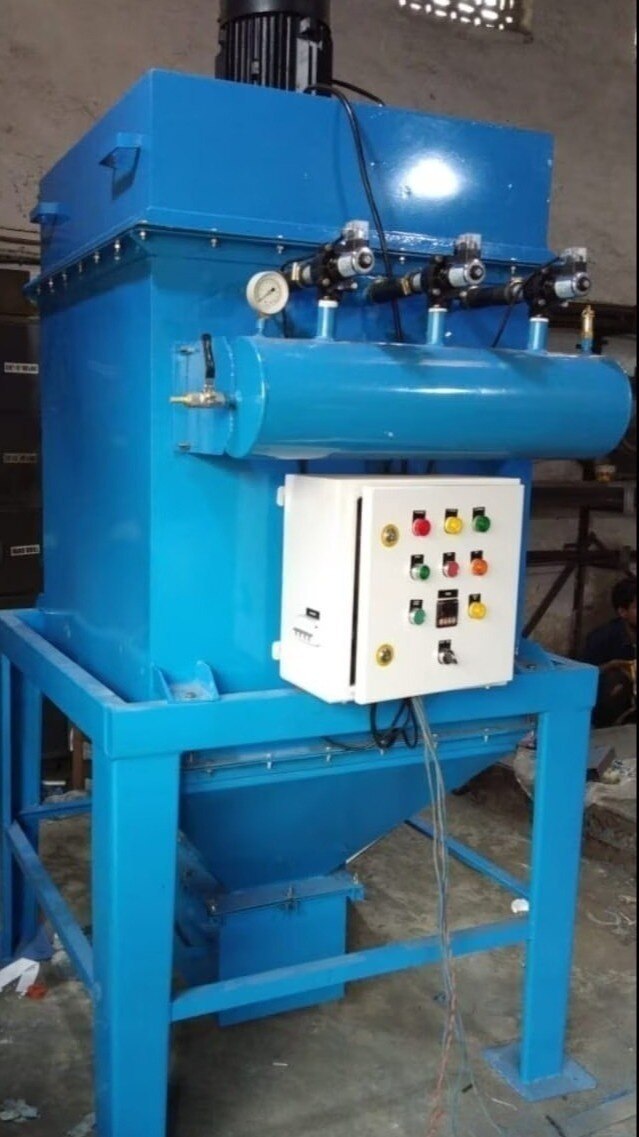
You are caring for two separate devices: a pulse-jet dust collector and an anti smog gun. The collector removes particulate from an air stream through filter bags or cartridges, while the gun atomizes water to suppress airborne dust.
Treat pulse jet dust collector anti smog gun care as two documented routines; anti smog gun care does not replace source capture, enclosure, or collector maintenance.
- Record the process dust, collector model, filter-media type, airflow, differential-pressure reading, pulse-air pressure and dew point, fan current, hopper condition, water quality, nozzle condition, and before-and-after observations. “Serviced and cleaned” cannot explain a recurring fault.
- Stop the connected process and fan, then isolate and lock out electrical power.
- Isolate and lock out compressed air, including the receiver and pulse manifold; stopping the fan does not remove stored pressure.
- Isolate rotary valves, screw conveyors, discharge equipment, and connected process machinery before entering or opening the collector.
- Shut off and isolate the anti smog gun’s water pump and electrical supply. Drain or depressurise its line before removing a strainer or nozzle.
- If the dust is combustible, control ignition sources, remove accumulated dust, verify bonding and grounding, and preserve explosion venting or suppression systems. Do not bypass interlocks or enter until the site’s confined-space procedure permits it.
Follow a maintenance schedule from every shift to the annual shutdown
Use this pulse jet dust collector maintenance schedule separately from the anti-smog gun routine; water-mist care cannot replace filter, hopper, compressed-air, or combustible-dust controls.
1. Before each start, check that access doors are closed, guards are fitted, the hopper and discharge path are clear, and no dust has accumulated around motors or electrical panels. Confirm the fan, rotary valve, screw conveyor, and anti-smog gun are ready.
2. Daily, record airflow, differential pressure, fan current, pulse-air pressure, and air-receiver dew point. Inspect the gun’s inlet strainer, water leaks, spray pattern, and nozzle condition; flush its line after shutdown.
3. Weekly, clean external dust deposits, inspect filter access-door seals, tube-sheet areas, pulse pipes, hoses, and solenoid connections. Check bonding and grounding, and remove hopper buildup before it bridges over the outlet.
4. Monthly, compare differential-pressure trends with the previous readings. A rising trend points to blinding, heavy loading, weak cleaning, or wet dust; an unexpectedly low reading demands checks for torn media, a leaking tube sheet, an open door, or faulty instrumentation.
5. Quarterly, inspect filter bags or cartridges, cages, gaskets, pulse valves, and discharge equipment during an isolated service window. Replace media with holes, severe blinding, damaged seams, distorted cages, or poor seating, and verify correct installation direction.
6. At the annual shutdown, clean the collector internally, inspect fan bearings and structure, test interlocks, and review explosion venting or suppression equipment for combustible dust. Test water filtration and nozzles, then document before-and-after readings, defects, and replacements.
Service filters, pulse cleaning, and compressed-air controls without causing damage
A rising differential-pressure trend points first to blinded filter media, excessive dust loading, weak pulse cleaning, or wet dust—not automatically to a failed filter. An unexpectedly low reading points to a torn bag, leaking tube sheet, open access door, or faulty pressure instrument.
- Filter media: Inspect bags or cartridges for holes, caked dust, damaged cages, distorted pleats, and poor tube-sheet seating. Replace media with tears, hardened deposits, or damaged gaskets; install bags in the specified direction and seal the tube sheet correctly.
- Pulse valves: Listen for missed or weak pulses and inspect diaphragm condition, solenoid operation, pilot tubing, and nozzle alignment. A valve that leaks continuously wastes air; a valve that fails to open leaves one filter row dirty.
- Compressed air: Check receiver pressure, automatic drains, regulator setting, tubing, and manifold for condensate, oil, scale, and leaks. Measure pressure and dew point at the collector inlet, not only at the compressor.
Use the controller’s pulse sequence and specified pressure for dust collector cleaning. Do not aim a compressed-air lance at filter media; the jet can tear fabric, damage pleats, and re-entrain respirable or combustible dust. Vacuum settled dust with equipment rated for the hazard.
Lock out the fan and release retained manifold pressure before service. Record differential pressure before and after cleaning, pulse-air pressure, filter condition, and the faulty component. Keep anti-smog gun water-system records separate from pulse jet dust collector maintenance records.
Keep the hopper, discharge path, fan, and anti-smog water system working together
A rising hopper level does not prove effective dust removal. Check that the rotary airlock or screw conveyor runs without slipping, bridging, or air leakage, then compare the collector’s differential-pressure trend and outlet dust with the normal baseline. Never enter the hopper or strike its walls; use approved external flow aids within the manufacturer’s limits.
Verify the complete air path with these checks:
- Measure airflow at the design test point and compare it with the commissioning value.
- Record fan current, rotation, vibration, and unusual bearing or belt noise; a falling airflow with rising current points to a restriction or fan fault.
- Check that the hopper discharge seal closes properly, because leakage reduces collector performance.
- Inspect the outlet or stack for visible dust and arrange the required workplace-exposure or stack-emission measurement; a clean-looking area does not prove compliant filtration.
- Record before-and-after observations during dust collector cleaning, including hopper level, differential pressure, airflow, and visible emissions.
Treat anti smog gun care as a separate task. Inspect the inlet strainer and water filter, confirm clean water reaches the pump, and examine every nozzle for wear or partial blockage. A blocked nozzle creates coarse, uneven droplets that wet equipment instead of suppressing dust.
Aim the mist at the dust source, not the filter housing. Check for plume reduction, runoff, mud, corrosion, wet filter media, and electrical hazards; reduce flow or stop the gun if these appear. Flush the water line after shutdown and document water quality, nozzle condition, pressure, and operating observations.
Turn service findings into a useful industrial maintenance record
A useful record shows what changed, not merely that someone “serviced and cleaned” the unit. For industrial dust equipment service in Bengaluru, record the collector and anti-smog gun as separate systems, then compare each visit with previous readings.
Record these fields at every visit:
- Process dust: material, moisture condition, visible buildup, and whether the dust is combustible.
- Collector model, serial number, filter-media type, bag or cartridge count, and installed filter condition.
- Airflow at the collector inlet or outlet, plus differential pressure and its trend since the previous visit.
- Pulse-manifold pressure, pulse frequency, valve response, receiver pressure, and compressed-air dew point.
- Fan current, rotation, vibration, damper position, and any unusual sound.
- Hopper level, rotary valve or screw-conveyor operation, discharge blockage, and leakage.
- Anti-smog gun water source, filter condition, measured water quality, nozzle wear, spray pattern, and pump pressure.
- Before-and-after photographs, readings, replaced parts, corrective action, and the person who approved the equipment’s return to service.
- Lockout/tagout points checked, residual compressed-air pressure released, and combustible-dust controls verified before opening the collector.
For pulse jet dust collector maintenance, chart differential pressure instead of recording one “normal” value. A rising trend points toward blinding, loading, weak cleaning, or wet dust; an unexpectedly low reading demands checks for torn filters, tube-sheet leaks, open doors, and faulty instruments.
Vayuvents Private Limited can use this evidence when diagnosing repeat faults, but the record should also state whether workplace exposure or stack-emission measurements changed. Water mist can hide visible dust without fixing source capture or outlet emissions.
Related products
 | Strong Filtration System For Use In Large Industrial Environment A pulse jet dust collector is a type of suck and filter machine, wherein dust is... View product → |
 | Dust Collector Baghouse Dust Collector Pulse Jet Baghouses Baghouse are the most versatile dust collector style and can be used in all applications. |
Frequently asked questions
What should you check during every shift on a pulse-jet dust collector?
Check differential pressure, unusual fan noise, hopper level, dust discharge, compressed-air pressure, visible leaks, and filter emissions. Record readings and isolate the equipment if you find unsafe conditions.
How do you service pulse-jet filters without damaging them?
Use the collector’s pulse-cleaning system at its specified pressure and sequence. Inspect bags or cartridges for holes, blinding, cage damage, and poor seating; do not beat, wash, or use uncontrolled compressed air on the media.
What maintenance does an anti-smog gun need?
Inspect the nozzle, pump, water line, filter, swivel, wiring, and spray pattern. Remove sediment, prevent freezing or stagnant water, correct leaks, and confirm that atomized water reaches the intended dust source without flooding the area.
What should an industrial dust-equipment maintenance record contain?
Record the date, equipment identity, operating hours, differential pressure, air and water readings, inspection results, defects, parts replaced, technician, and follow-up action. Attach photographs or test results when they clarify the finding.
Related products
 | Dust Collector Cartridge Type Pulse-Jet Dust Collector Pulse Jet Bag Filter / Pulse Jet Hose Bag Type Filters are known as conventional dedusting filters. |
 | Dust Collector Cyclone + Pulse Jet Dust Collector Cyclone Dust Collector - Modern Filtration System As various production activities occur in an industrial setup, one device that is of utmost... View product → |