Vehicle exhaust becomes a ventilation problem when air cannot travel from a clean opening, across the parking area, and out through a high-level discharge point. By the end, you will be able to judge whether a wind ventilator has a workable replacement-air path, where stagnant zones are likely to form, and what measurements to request before accepting the installation.
Key takeaways
- Use ramps, louvers, and perimeter openings as replacement-air paths.
- Place roof ventilators to serve the full car park, not one isolated zone.
- Use powered extraction when pollutants cannot disperse through natural openings.
- Measure airflow, carbon monoxide, and pressure after installation.
How air moves through a car park without a fan motor
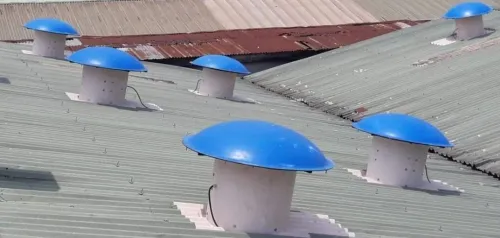
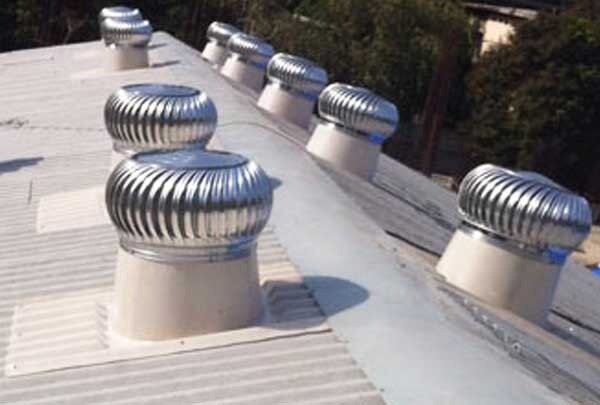
Natural car park ventilation moves air through pressure differences, not a fan motor. Wind creates lower pressure around a roof ventilator’s cowl or turbine, pulling air upward from the car park; replacement air enters through vehicle ramps, perimeter openings, louvers, or grilles.
If the space is sealed, the ventilator quickly loses airflow because there is not enough make-up air.
Warm air rises and gathers near the ceiling, carrying diluted exhaust with it. This stack effect strengthens when the car park is warmer than the outside air and when low-level openings let cooler air enter.
In an open-sided or ground-level car park, distributed openings allow wind to sweep through the occupied area before air leaves through high-level openings.
Useful entry routes include:
- Open sides along the perimeter
- Vehicle ramps connecting to outside air
- Louvers and grilles placed on opposing or separated walls
A roof wind ventilator mainly extracts; it does not create the sweeping, low-level air movement produced by jet fans or powered supply and exhaust fans. In a basement, ramps and shafts can provide part of the air path, but solid walls, columns, partitions, and parked vehicles can leave stagnant pockets.
One large opening can also cause short-circuiting, where incoming air travels directly to the nearest outlet without crossing the parking bays. During still air, wind-driven extraction has no guaranteed airflow, so an enclosed or pollution-sensitive basement needs powered or hybrid assistance.
Why roof ventilator location determines the airflow path
Place inlets at the perimeter or near the lower level, then position roof ventilators beyond the occupied parking area so replacement air crosses parking bays before reaching the exhaust. A wind ventilator for parking extracts air through wind pressure over its cowl or turbine; it does not push a clean-air stream across a basement.
- Distribute inlets along more than one perimeter side, using ramps, louvers, grilles, or open façades. Keep them away from the nearest roof outlet so air does not travel straight from entry to exit.
- Locate roof ventilators over areas where contaminated air collects, while spreading them across the roof rather than grouping them above one opening. Check the airflow path around solid walls, columns, ramps, and internal partitions.
- Place discharge points where the outlet plume will not return through an inlet. Parapets, plant screens, taller buildings, and adjacent towers can create recirculation or weak-pressure zones, so review the roof wind exposure before fixing positions.
A large opening beside a bank of roof ventilators can steal the airflow from the rest of the car park, leaving stagnant pockets behind walls and ramps. Request a wind study, site wind data, or CFD review when obstructions make the pressure pattern uncertain.
In a deep basement, a wind ventilator alone cannot create the sweeping, parking-level movement needed for reliable dilution. Add powered supply and exhaust fans or jet fans when the planned airflow must cross a large occupied area rather than simply rise to the roof.
What pollutants require more than a simple extraction point
A roof wind ventilator provides extraction, not a sweeping airflow pattern at parking level. It can remove warm, contaminated air near the ceiling, but it will not reliably carry carbon monoxide or nitrogen dioxide across a large basement unless air enters through suitable ramps, louvers, or grilles.
Where dilution depends on cross-flow, use powered supply and exhaust fans or jet fans; advertised car parking fan airflow does not prove that result.
Treat everyday dilution and fire smoke extraction as separate design functions. A ventilator selected for vehicle emissions is not automatically a smoke-control system. Fire design must address hot-smoke buoyancy, fire exposure and exhaust temperature, make-up air, smoke reservoirs, emergency power, and automatic controls required by the project’s fire strategy.
Check pollutant dilution with measurements, not a ventilator count. Use this commissioning checklist:
- Measure CO during representative vehicle movements and record readings at occupied parking levels, ramps, corners, and queuing areas.
- Add NO2 monitoring where the risk assessment identifies diesel vehicles or heavy traffic; document sensor locations, calibration dates, alarm setpoints, voting logic, and failure alarms.
- Compare readings with the ventilation system off and operating at each control stage. Concentrations that remain high in stagnant zones show that extraction is short-circuiting or the airflow path is incomplete.
- Use calibrated anemometers, smoke pencils, or tracer gas to confirm air crosses the occupied area rather than travelling directly from an inlet to a roof outlet.
- For any fire claim, request the smoke-control design calculation and equipment rating; do not substitute a free-air rating or everyday CO test.
How to compare a wind ventilator with powered car-park ventilation
Choose on delivered airflow, not the roof ventilator’s free-air rating. A supplier should show how much air the unit extracts at the pressure created by louvers, insect screens, ducts, grilles, roof openings, and discharge resistance. Without that calculation, a quoted air volume says little about a basement car park.
| Option | Performance information to compare | Main limitation |
|---|---|---|
| Wind ventilator | Airflow-versus-static-pressure curve; test method; effective wind-speed range; weatherproofing; installed pressure-loss calculation | Extraction falls sharply in calm, shielded, or adverse wind conditions and does not create sweeping airflow at parking level |
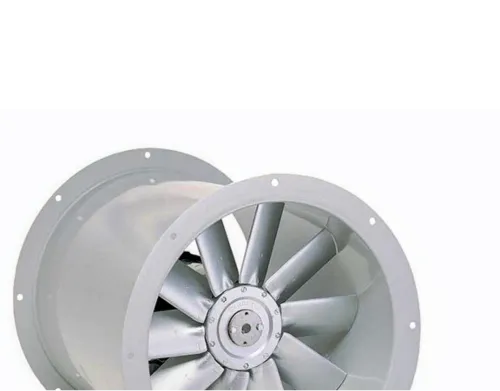
| Powered ventilation | Fan duty point, motor power, control range, noise, standby arrangement, and measured airflow at each outlet | Uses electricity and needs maintenance, controls, and protected power |
| Hybrid system | Wind-unit output across wind speeds, fan-assisted duty point, automatic changeover settings, and minimum guaranteed airflow | Costs more to coordinate, but retains low-energy operation while covering still-air periods |
For a car parking fan in Bengaluru, provide the designer with roof height, surrounding buildings, wind exposure, monsoon rain direction, ramp and louver areas, basement geometry, vehicle count, and required fire and building-control criteria. City name alone cannot predict performance; a unit suited to an exposed roof can underperform beside dense development.
Ask Vayuvents Private Limited, or any supplier, to separate everyday pollutant dilution from smoke extraction. A wind ventilator selected for carbon-monoxide dilution is not automatically suitable for hot smoke, make-up air, fire exposure, emergency power, or smoke-reservoir design.
Related products
 | Wind Ventilators Manufacturer Powerless Ventilators work on the principle to draw fresh air inside and exhaust overheated and moisture-laden air. |
 | Turbo Ventilators The turbo ventilator is recognized by its inherent nature to utilize the natural force of wind to draw heat and moisture out of the roof . |
How to verify airflow after installation
Commissioning is complete only when measured results, not a visual inspection, show that the installed system delivers its stated airflow. Test wind-only and fan-assisted operation, because a roof ventilator can extract air without creating the cross-car-park movement needed for dilution.
1. Measure airflow at representative roof outlets and fan terminals, then compare each result with the manufacturer’s airflow-versus-static-pressure curve and stated test conditions. Record wind speed, pressure, and resistance from louvers, grilles, screens, ducts, and discharge points.
2. With fans off, confirm that air enters through ramps, open sides, louvers, or dedicated inlets and reaches the exhaust points. Use smoke tracing at parking level to find stagnant zones or short-circuiting, then repeat with fans running at each control stage.
3. Run CO and NO₂ controls through their setpoints and verify sensor readings, alarms, fan-start commands, and reset behaviour. A fan that starts but receives no make-up air will deliver less flow as pressure rises.
4. Inspect for wind-driven rain ingress, condensate drainage, blocked bird screens, abnormal noise, vibration, and safe access for cleaning. Record readings in calm and windy conditions; wind-only extraction has no guaranteed output during still air.
Keep the signed commissioning record with airflow, pressure, wind-speed, control-response, and defect readings. That evidence shows how wind ventilators for work in car parks perform under actual installation conditions, rather than under a free-air catalogue rating.
Frequently asked questions
How does a wind ventilator move air through a car park without a motor?
Wind passing over the cowl or turbine creates lower pressure at the outlet, drawing contaminated air upward. Replacement air enters through ramps, louvers, grilles, and perimeter openings.
Why does roof ventilator location affect car park airflow?
Location determines the extraction path. A ventilator above a poorly connected corner can leave lower levels or enclosed bays stagnant, while distributed outlets support more even airflow.
When does a car park need more than a simple extraction point?
Use additional extraction or powered ventilation when carbon monoxide and nitrogen dioxide cannot disperse, when levels are enclosed, or when ramps and openings do not provide enough replacement air.
How can you verify airflow after installing a wind ventilator?
Test air movement at ramps, bays, and corners with smoke or anemometers, then measure carbon monoxide and nitrogen dioxide under representative traffic conditions.