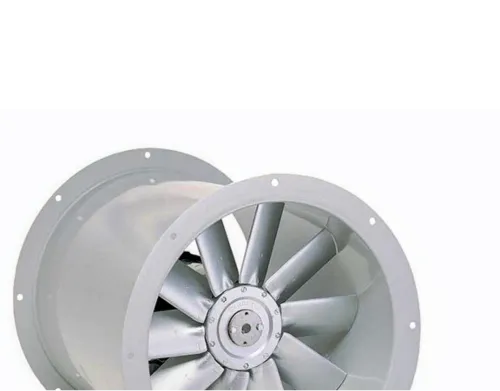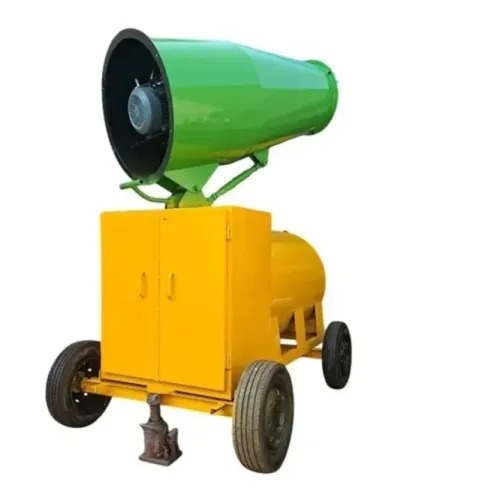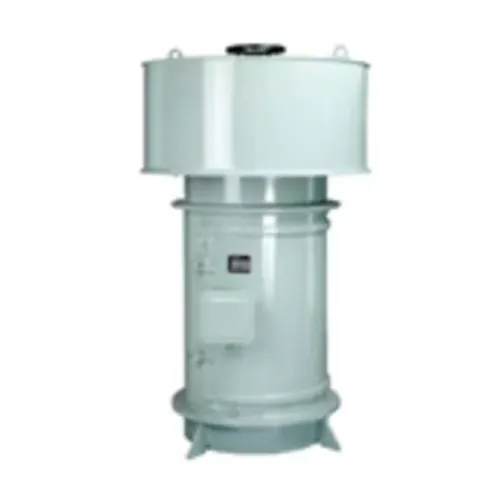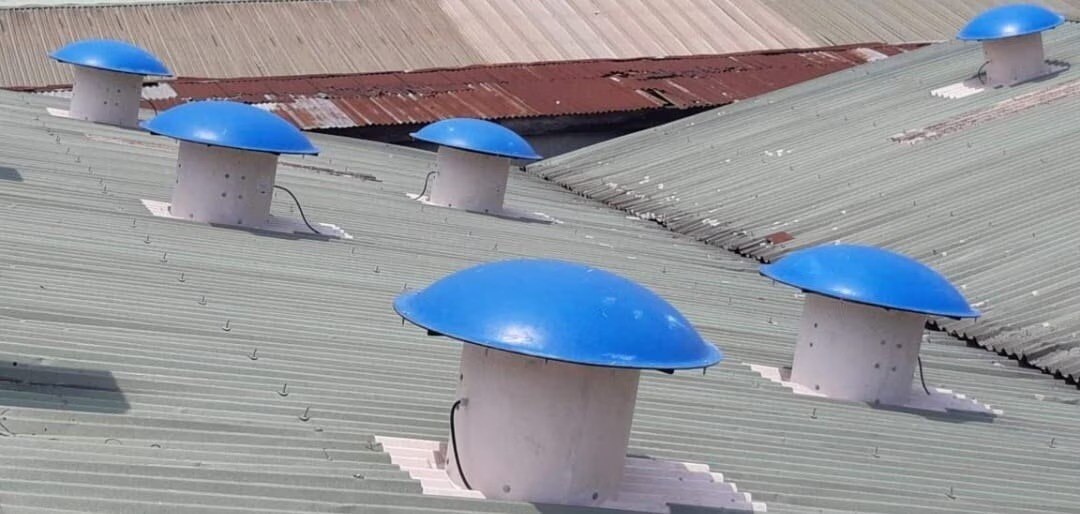
A roof-mounted extractor and an internal jet fan solve different parts of a parking-ventilation problem: one collects and discharges air, while the other propels air across the parking level. The right choice depends on basement geometry, pollutant-control targets, make-up air, fire strategy and the fan duty point—not on catalogue airflow alone.
Key takeaways
- Use roof extractors for ducted removal; use car parking fans to move air along the ceiling.
- Map vehicle pollutants, pressure loss and make-up air before selecting fan capacity.
- Interlock fans with sensors, fire controls, dampers and emergency power.
- Verify discharge location, noise, vibration, access and commissioning records.
What is the actual difference between a roof extractor and a car parking fan?
A roof extractor fan and a car parking fan do not perform the same air-removal function. A roof extractor is usually connected to ductwork, draws basement air into negative pressure, and discharges contaminated air through a roof outlet.
A car parking fan usually means a jet or impulse fan mounted inside the basement, pushing air horizontally rather than exhausting it outdoors.
| Option | Airflow role | Physical arrangement | Main limitation |
|---|---|---|---|
| Roof extractor fan | Extraction and discharge | Ducts, grilles, shafts and roof outlet | Needs replacement air and adequate duct capacity |
| Jet or impulse fan | Horizontal air movement | Ceiling-mounted or suspended within the parking level | Cannot discharge pollutants without exhaust points |
| Supply fan | Introduces replacement or make-up air | Outdoor-air intake, duct or supply louver | Does not remove contaminated air alone |
| Smoke-extract fan | Removes smoke in a fire mode | Dedicated fire-rated system and discharge route | A comfort-ventilation fan cannot automatically perform this duty |
A jet fan does not remove carbon monoxide or nitrogen dioxide by itself. It carries polluted air toward defined exhaust points, while ramps, shafts, louvers or supply fans provide replacement air and controls respond to measured conditions. Without that complete path, air can recirculate or short-circuit near the outlet.
A parking exhaust fan therefore describes the extraction function, not every fan installed in a car park. Smoke extraction also requires a tested smoke-control strategy, suitable temperature performance, fire-mode controls and power arrangements; normal comfort ventilation is not an automatic substitute.
Which system fits your basement layout and airflow path?
Basement geometry decides the system: ducted roof extraction suits defined collection points, while jet-fan ventilation suits open floors with a validated airflow path.
| Option | Airflow path | Best fit | Main risk |
|---|---|---|---|
| Ducted roof extraction | Air travels through grilles, ducts and shafts to a roof outlet | Deep basements, multiple levels, low ceilings, heavy beams or many columns | Space, fire dampers, penetrations and predictable make-up air are required |
| Jet or impulse fans | Fans push air horizontally towards exhaust points | Open parking levels with adequate ceiling height and accessible ramps | Vehicles, beams, ramps and dead zones can block or recirculate flow |
| Natural ventilation | Outdoor air enters and leaves through permanent openings | Open-sided or lightly enclosed parking areas | Uncontrolled wind paths cannot guarantee pollutant removal or smoke movement |
A car parking fan comparison is useful only after mapping the architecture. Jet fans reduce ductwork, but require airflow modelling or CFD validation; thrust alone does not prove that carbon monoxide or nitrogen dioxide will reach an exhaust point.
Use this decision check:
- Map every supply opening, ramp, transfer path, exhaust grille and roof outlet across every parking level.
- Trace air through occupied bays, around columns and below beams, past parked vehicles and through changes in ceiling height.
- Check for short-circuiting, especially where make-up air enters beside an exhaust point.
- Confirm that doors, ramps and shafts provide intentional transfer paths rather than relying on leakage.
A roof extractor fan for parking cannot ventilate a sealed basement alone. Without make-up air, transfer paths or connected ductwork, it depressurises the space, loses airflow and leaves stagnant zones behind. Multiple levels also require system-level access and redundancy, not merely one large roof fan.
How do you size the fans for pollutants, pressure and airflow?
Start with basement volume: multiply it by the air-change rate required by the governing local code or approving authority, then convert the result to cubic metres per hour. That gives a baseline, not a defensible parking exhaust fan selection.
| Basis | Required check | Why it matters |
|---|---|---|
| Air changes | Basement volume × applicable air-change rate | Establishes the minimum general-ventilation airflow |
| Pollutants | CO from petrol vehicles, NO2 where diesel traffic is significant, and queuing emissions | Nominal air changes alone do not prove pollutant control |
| Fire mode | Required smoke-extract airflow, temperature rating and operating duration | Normal ventilation duty cannot be assumed to control smoke |
Mark the fan duty point in cubic metres per hour and pascals. Calculate resistance from duct friction, bends, grilles, louvers, filters, fire dampers, weather hoods and discharge fittings; a fan selected by free-air volume can deliver very little at the installed pressure.
- Read the fan curve at the duty point, not at zero resistance.
- Check absorbed power, maximum absorbed power, efficiency and motor rating.
- Confirm rotation speed, operating point, vibration limits and control range.
- Verify motor power against the worst-resistance condition, not the nominal condition.
For a roof extractor fan in Bengaluru, apply air-density correction for the site elevation of about 900 metres and the actual operating temperature. Lower density changes the pressure and power relationship from standard sea-level test conditions.
The same calculation applies to a parking exhaust fan: approve the corrected curve, not just catalogue airflow or motor kilowatts.
How should controls, make-up air and fire modes work together?
Normal occupancy, high pollution and fire require separate control sequences, not one fan setting. Make-up air must enter through ramps, shafts, wall louvers or dedicated supply fans so the parking exhaust fan removes air along a planned route.
| Mode | Fan operation | Air path and controls |
|---|---|---|
| Normal occupancy | Minimum ventilation, increased by demand | Maintain make-up air and use CO readings |
| High pollution | Stage fans or increase speed with variable-speed drives | Use representative CO and, where diesel traffic warrants, NO2 readings |
| Fire | Smoke-extract sequence only | Use emergency power, fire-mode controls and the approved smoke path |
Excessive negative pressure is a failure, not proof of good extraction. It pulls air through unintended gaps, leaves stagnant zones, makes doors difficult to open and can disrupt ramp airflow. Balance supply and exhaust, then confirm pressure and airflow at doors and transfer openings.
Place sensors in occupied pollutant zones, away from a clean exhaust stream or fresh-air outlet. Calibrate them to the manufacturer’s procedure, record calibration dates, alarm at defined concentrations, and retain a minimum fan speed even when readings are low.
Loss of sensor signal, controller failure or power loss needs a documented fail-safe state, such as minimum ventilation and an alarm.
Normal parking ventilation is not smoke extraction. Smoke duty can require high-temperature certification, emergency power, fire-rated cabling, dedicated fire-mode controls and a tested smoke-control strategy. In a car parking fan comparison, specify these requirements at system level.
Use multiple fans for staged operation and maintenance continuity where practical. One large unit creates a single point of failure; smaller units add starters, penetrations and maintenance tasks.
What should you verify before approving a roof-mounted parking fan system?
Do not approve a roof extractor fan or car parking fan from catalogue airflow and motor kW alone. Request a signed technical submittal and compare the stated duty with the design calculation.
1. Request the fan curve with the marked duty point: airflow in cubic metres per hour, static pressure in pascals, absorbed power, efficiency, rotation speed, sound power, and sound pressure. Require the test standard, measurement distance and room conditions; sound power and sound pressure are not interchangeable.
Include motor rating, enclosure or IP classification, insulation class, rotation, vibration limits, balancing record and duty-point tolerance.
2. Check the roof installation separately. The supplier must show protection against rain ingress, corrosion of casing and fasteners, UV exposure, and water accumulation; detail the roof curb, flashing, drainage, vibration isolation and maintenance access. Confirm that replacement work will not puncture or overload the roof membrane.
3. Obtain the control sequence for normal ventilation, staged operation, high CO or NO2 alarm, fan failure, sensor calibration intervals, alarm setpoints and fail-safe operation. Request fire or smoke certificates where applicable; a normal ventilation fan is not a smoke-extract fan without certified high-temperature duty, emergency power, fire-rated cabling and a tested strategy.
4. For a roof extractor fan in Bengaluru, plot the discharge against outdoor-air intakes, windows, occupied terraces and neighbouring buildings under prevailing winds. Check outlet velocity and recirculation, not just vertical discharge height. Vayuvents Private Limited can be one manufacturer in the comparison, but the technical submittal should decide approval.
Frequently asked questions
What is the actual difference between a roof extractor and a car parking fan?
A roof extractor pulls basement air through ductwork and discharges it outdoors. A car parking fan, often a jet fan, moves air within the basement toward a designated exhaust point; it does not replace the final exhaust fan or make-up air path.
Which system fits my basement layout and airflow path?
Choose a ducted roof extractor when you need defined extraction points, separated zones or controlled discharge. Choose car parking fans when the basement has an open ceiling and a clear airflow path to extract points. Map obstructions, ramps, columns, doors and make-up air openings first.
How do I size fans for pollutants, pressure and airflow?
Set the required airflow from the ventilation and pollutant-control design, then select the roof extractor against system pressure loss from ducts, bends, filters, dampers and outlets. Select car parking fans for thrust and coverage, not only their free-air volume.
How should controls, make-up air and fire modes work together?
Coordinate carbon-monoxide and nitrogen-dioxide sensors, fan staging, make-up air, smoke-control logic, fire alarm signals, dampers and emergency power. Document which fans run, stop or change speed in normal, high-pollutant and fire modes.