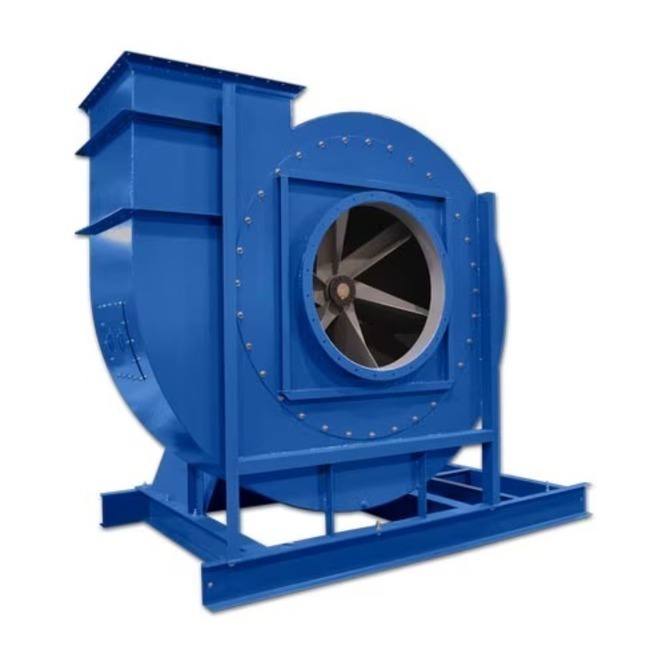
Industrial facilities depend on controlled airflow for processes ranging from ventilation and cooling to dust handling and material movement. When ordinary ventilation fans cannot provide the required pressure, a Centrifugal Blower becomes a practical solution. It is designed to move air or gases against resistance created by ducts, filters, dampers and other components within an industrial system.
A centrifugal blower works by drawing air into the centre of a rotating impeller. The impeller accelerates the air outward, after which the blower housing converts part of this velocity into pressure. This operating principle makes centrifugal blowers suitable for applications where air needs to travel through a duct network or overcome relatively high system resistance.
For manufacturing facilities in Bengaluru and other industrial areas of Karnataka, blower selection can influence ventilation efficiency, equipment performance and workplace conditions.
Where Are Centrifugal Blowers Used?
Centrifugal blowers are found across several industrial processes. Common applications include:
Industrial ventilation and exhaust systems
Dust collection arrangements
Fume extraction systems
Combustion air supply
Drying and cooling processes
Air pollution control equipment
Material conveying applications
Process air circulation
The actual blower configuration depends on the nature of the application. A system designed for clean ventilation air may have different requirements from one handling dusty, hot or contaminated air.
Why Airflow and Pressure Must Be Considered Together
One common mistake when selecting a blower is looking only at airflow capacity. The blower must also generate sufficient pressure to overcome the resistance within the complete system.
Long ducts, bends, filters, dampers, cyclones and other equipment can increase resistance. If this is not considered during selection, the actual airflow at the operating point may be different from what the process requires.
A proper assessment therefore considers both required airflow and system static pressure.
Other Factors That Affect Blower Selection
Before selecting a centrifugal blower, industrial users should evaluate:
Required air volume
Static pressure requirement
Temperature of the air or gas
Dust or particulate concentration
Nature of the handled gas
Duct configuration
Expected operating hours
Installation environment
Maintenance accessibility
Motor and drive requirements
Material of construction also deserves attention. Applications involving corrosive fumes or harsh process conditions may require materials different from those used for normal ventilation.
Energy Efficiency Matters in Continuous Operations
Many industrial blowers operate for several hours every day. An incorrectly selected unit can consume unnecessary power while still failing to provide ideal airflow.
Correct blower sizing helps align the equipment with the actual system operating point. Depending on the application, airflow control arrangements may also help match blower output with changing process requirements.
Routine inspection is equally important. Dust accumulation, worn components, loose belts, bearing problems and blocked filters can affect blower performance over time.
Bengaluru's Industrial Requirements
Bengaluru has a diverse industrial ecosystem covering engineering, electronics, automotive components, pharmaceuticals, food processing and numerous manufacturing activities. Ventilation requirements can vary considerably across these facilities.
Vayuvents Private Limited works with industrial air movement and ventilation applications in Bengaluru, where understanding the process requirement is an important part of equipment selection.
A centrifugal blower should therefore not be chosen simply according to motor rating or physical size. Airflow, pressure, operating temperature, contaminants and duct resistance should all be assessed together. When these factors are properly matched, the blower can become a reliable component of an efficient industrial air handling system.