A car-park fan can run at full speed while the roof exhaust path remains restricted by a closed damper, dirty impeller, failed belt, or blocked make-up-air opening. By combining a scheduled inspection with airflow, pressure, electrical, vibration, and air-quality checks, you can identify the fault and prove that roof ventilation has recovered after an interruption or pollution event.
Key takeaways
- Jet fans move contaminated air; roof fans extract it outdoors.
- Inspect fan blades, motors, controls, bearings, and access panels during maintenance.
- Track airflow, pressure, motor current, vibration, and temperature for decline.
- Verify roof ventilation recovery after fire, shutdown, or flood before reopening.
How do car-park fans and roof exhaust fans work as one ventilation path?
The complete path starts at make-up-air openings or supply louvres, where outdoor air enters the basement. Jet or impulse fans then push and redistribute contaminated air toward extraction points; they do not remove it from the building.
Air enters the extract grille, travels through an unobstructed duct, passes an open damper, and reaches the roof exhaust fan before leaving through the discharge cowl.
| Path component | Its job | What failure causes |
|---|---|---|
| Make-up-air opening | Replaces extracted air | Starved airflow and excessive negative pressure |
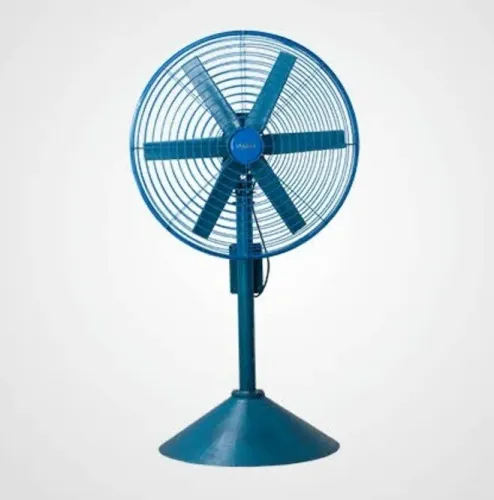
| Jet or impulse fan | Moves polluted air toward extraction | Dead zones when placement or direction is wrong |
| Extract duct and damper | Provides the route out | High resistance when blocked or partly closed |
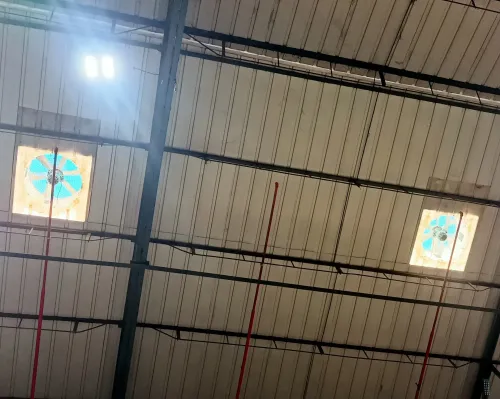
| Roof fan and cowl | Creates extraction and discharges outdoors | No effective removal despite motor rotation |
Blocked louvres, poor fan placement, a closed damper, or excessive pressure can reduce flow even when every motor starts. Inadequate make-up air limits the roof fan; excessive pressure increases leakage and energy use.
The maintenance benefits of car parking fan roof ventilation for maintenance benefits appear only when you inspect both ends as one system. Measure extract airflow against the design requirement, alongside static pressure, rather than trusting sound or rotation. Record this baseline so roof ventilation recovery proves restored airflow, not merely a cleared alarm.
What should you check during car parking fan maintenance?
Daily or weekly car parking fan maintenance starts with a visual check: look for alarms, abnormal noise, visible damage, water ingress, and blocked grilles. Record findings instead of relying on memory.
- Monthly, or sooner when dust loading is high, clean impellers, grilles, louvers, and roof cowls. Polluted deposits can unbalance an impeller and restrict airflow.
- Quarterly, inspect belts for tension, cracking, glazing, alignment, and pulley wear; check guards, bearings, shaft alignment, vibration isolators, flexible connectors, fasteners, corrosion, roof flashing, curb seals, drain paths, cable glands, and terminal boxes. Replace or tension belts to the manufacturer’s figure: over-tensioning damages bearings, while slack belts slip and reduce airflow.
- Lubricate only with the specified grease and quantity. Do not grease sealed-for-life bearings; over-greasing creates heat and can damage seals.
- Annually, test insulation resistance, earthing continuity, control operation, and protective devices. Recheck motor current and airflow after belt work or electrical repairs.
Before motorized roof ventilation fan care, isolate the stored energy:
- Notify affected personnel and stop automatic commands.
- Isolate and lock out electrical supplies, then discharge capacitors.
- Secure rotating parts and block any movement that could release energy.
- Prevent starts from the basement carbon-monoxide panel, fire system, BMS, or remote selector.
- Prove zero energy before opening guards or terminal boxes.
After monsoon periods, inspect roof cowls, flashing, seals, drains, cable glands, and corrosion closely; water can damage insulation or bearings without leaving obvious casing damage.
Which measurements prove that roof ventilation performance is declining?
A before-and-after test proves roof ventilation recovery better than a start signal or normal fan sound. Take both readings at the same damper position, VFD command, and representative operating condition.
| Measurement | Before service | After service |
|---|---|---|
| Fan rotation | Clockwise or anticlockwise, as specified | Same direction |
| VFD frequency or speed command | Hz or percentage | Same test command |
| Motor current | Phase L1, L2, and L3 in amperes | Compare balance and load |
| Fan static pressure | Pa at the fan | Compare delivered resistance |
| Airflow | m³/h at representative grilles or roof discharge | Compare capacity |
| Vibration and noise | mm/s and dB(A) | Check for increase |
| Damper position | Command, actual position, and end-switch feedback | Confirm full open |
| Runtime | Hours and start count | Compare after event or repair |
| Air quality | CO and NO₂ readings | Confirm intended range |
| Controls | Sensor calibration date, communications status, and alarm history | Confirm valid data and no unexplained alarms |
Low airflow with high pressure indicates a blocked grille, closed damper, dirty impeller, or excessive resistance. Low pressure and low airflow point to a loose belt, failed motor, reverse rotation, open duct leak, or damaged impeller.
High current suggests overload, bearing drag, an over-tensioned belt, or excessive airflow. Rising vibration indicates imbalance, misalignment, loose fasteners, or deteriorated isolators.
Returning a VFD to its former frequency does not prove recovery: system resistance rises approximately with the square of airflow, while power rises with its cube. A small restriction can therefore cut capacity while increasing energy use. Record these values during car parking fan maintenance, not only after a failure.
How do you verify roof ventilation recovery after a fire, shutdown, or flood?
Do not restart a roof fan after a fire or flood until you have established that the equipment and the airflow path are safe. Treat roof ventilation recovery as a staged inspection, control check, performance test, and air-quality verification.
| Stage | Action | Pass condition |
|---|---|---|
| 1. Make safe | Inspect for fire damage, soot, water, corrosion, damaged cables, wet motors, blocked drains, seized bearings, and contaminated sensors. | Water-damaged equipment is assessed and electrically tested before energisation. |
| 2. Restore controls | Confirm damper full-open position, fail position, end-switch feedback, local/remote selection, VFD status, interlocks, automatic restart logic, power availability, and the intended smoke-control or normal-ventilation sequence. | The fan cannot run against a closed damper, and every permissive and feedback signal operates correctly. |
| 3. Test airflow | Run the roof fan and basement jet fans. Measure airflow and static pressure, then compare both with commissioning records. | Extract performance meets the documented baseline; jet fans redistribute smoke but do not replace extraction. |
| 4. Verify air quality | Check CO and NO₂ during representative vehicle movement or occupancy. | Readings return to the intended operating range; a cleared alarm alone is not proof of recovery. |
For motorized roof ventilation fan care, record vibration, motor current, runtime, sensor calibration, and alarm history. A basement ventilation fan in Bengaluru also needs post-monsoon checks for humidity, condensation, corrosion, dust deposits, wet electrical enclosures, and water entry.
Keep normal maintenance evidence separate from life-safety compliance. Fire-mode fans, controls, power supplies, dampers, fire ratings, operating sequences, and test records must follow the project fire strategy and applicable standard. Do not change controls or use a VFD bypass without reviewing those requirements.
Which roof ventilation arrangement offers the most manageable maintenance response?
The most manageable arrangement is usually a motorized roof extractor with accessible controls and a defined make-up-air route, not a jet-fan-only scheme. Car parking fan roof ventilation for maintenance benefits depends on proving that contaminated air leaves the basement, not merely that a motor spins.
| Option | Inspection and repair access | Energy use | Rain and corrosion | Noise | Failure recovery |
|---|---|---|---|---|---|
| Motorized roof ventilator | Roof access; inspect motor, controls, damper, belt or drive | Controlled, measurable | Needs weatherproofing, seals and enclosure checks | Moderate; varies with speed | Fast when alarms, spares and bypass are available |
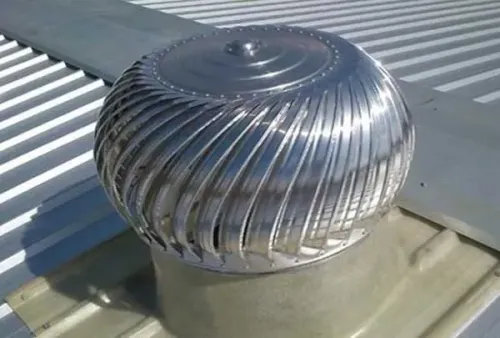
| Turbine ventilator | Simple hardware, but roof access remains necessary | No motor energy | Exposed to rain; wind-dependent | Low | Slow or unreliable during pollution events without wind |
| Wall exhaust fan | Easy service from wall or plant area | Direct motor load | Discharge, intake and weather conflicts | Can transmit directly indoors | Quick if clear access and replacement fan exist |
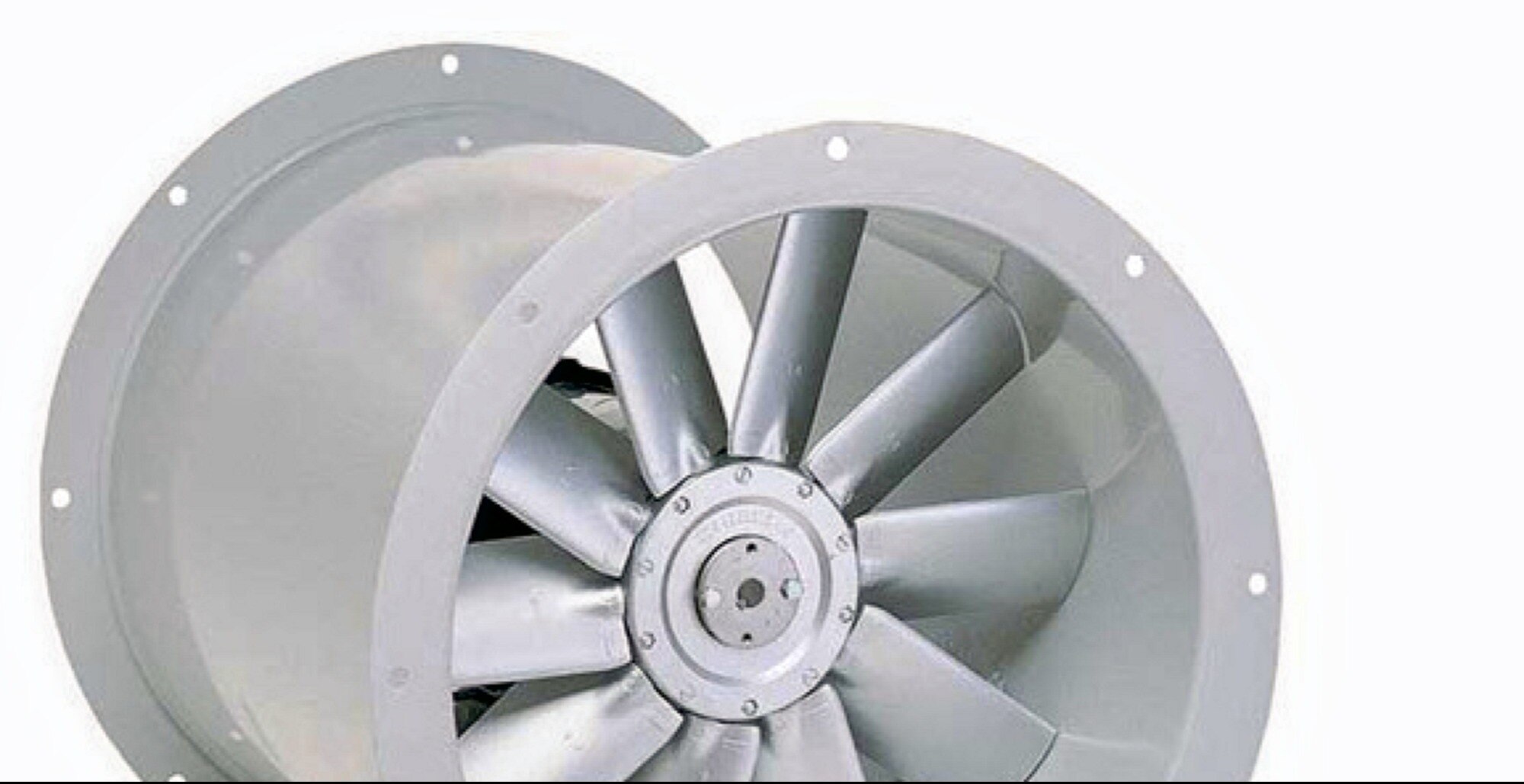
| Ducted centrifugal fan | Requires duct, bearing, belt and access-panel inspection | Higher resistance can increase demand | Duct leaks and casing corrosion need control | Usually higher without acoustic treatment | Moderate; duct faults extend restoration |
| Jet-fan-only | Basement access is convenient | Distributed motor load | Exposed units need cleaning | Can be intrusive | Cannot recover extraction without a working exhaust and make-up-air path |
Ask an industrial ventilation supplier for a maintenance-access plan, test points, spare-parts list, control schematic, commissioning baseline and recovery procedure. Specify measured airflow, pressure and current, not a fan-only quotation. Vayuvents Private Limited belongs in that comparison when its design, manufacture, supply and commissioning scope includes those records.
That is the practical core of car parking fan maintenance.
Related products
 | The efficiency of Conventional Ventilators is dependent on wind velocity. View product → |
 | Roof Ventilator Electric Roof Top Ventilator Vayuvents Private Limited is India’s leading Industrial Electric Ventilator exporters. |
Frequently asked questions
How do car-park fans and roof exhaust fans work as one ventilation path?
Make-up-air openings admit outdoor air, jet fans redistribute basement air, and roof exhaust fans discharge contaminated air outdoors.
What should you check during car parking fan maintenance?
Inspect blades, guards, motors, bearings, wiring, controls, mounting hardware, dampers, and access panels; record vibration, temperature, and motor current.
Which measurements prove that roof ventilation performance is declining?
Compare airflow, static pressure, motor current, vibration, bearing temperature, and carbon-monoxide response with commissioning records and previous readings.
How do you verify roof ventilation recovery after a fire, shutdown, or flood?
Inspect and clean equipment, test insulation and controls, confirm airflow and pressure, check contaminant readings, and document a successful full-system run.
Which roof ventilation arrangement offers the most manageable maintenance response?
Choose an arrangement with safe access, isolation points, replaceable components, clear discharge paths, monitoring points, and documented commissioning values.
Related products
 | Get A Clean Environment With Electrically Operated Roof Extractor Fan Electrically Operated Roof Extractor Fan is a device that takes in air from... View product → |
 | Roof Ventilator Motorized Roof Ventilation Fans Vayuvents Private Limited manufacturing and exporting high quality Motorized Roof Exhaust Fans worldwide. |
 | Roof Ventilation Fan Vayuvents Private Limited manufacturing and exporting high quality Roof Exhaust Fan worldwide. |