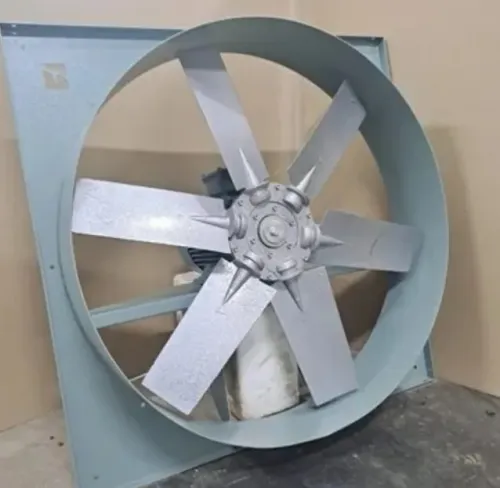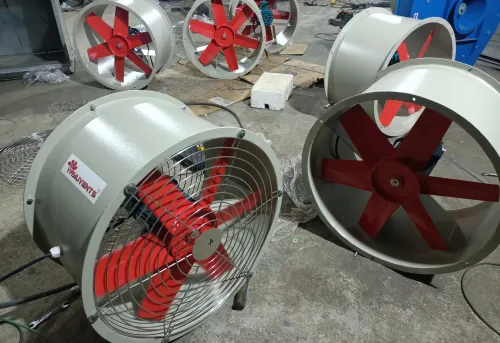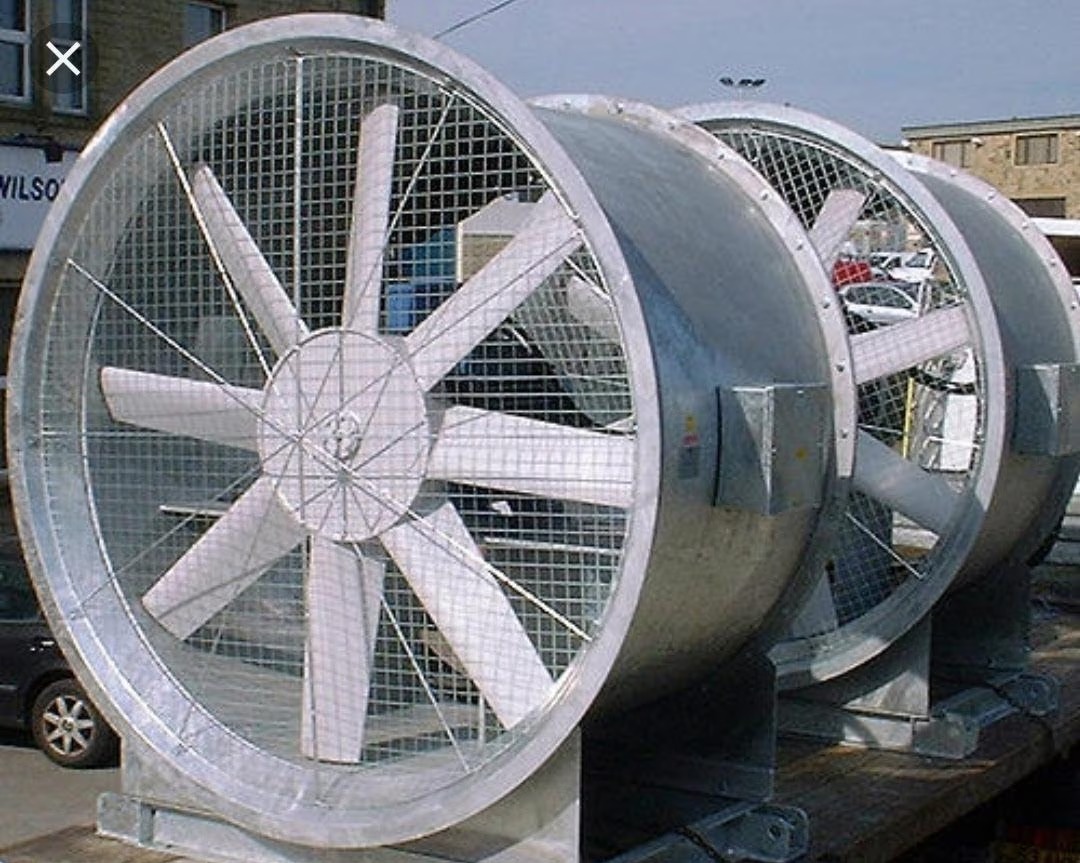
An Axial Fan is one of the most widely used solutions for moving large volumes of air where relatively low pressure is required. Its operating principle is straightforward: the rotating blades move air in a direction generally parallel to the fan shaft. This makes axial fans useful for ventilation, cooling, exhaust and general air circulation.
Although the concept appears simple, choosing an axial fan solely by diameter can lead to disappointing performance. Industrial facilities in Bengaluru need to consider airflow demand, resistance, temperature, operating conditions and installation arrangement before finalising a fan.
What Makes an Axial Fan Suitable for Ventilation?
Axial fans are particularly useful when the requirement is to move a substantial quantity of air without pushing it through a highly restrictive system.
They are commonly considered for:
Factory ventilation
Equipment cooling
General exhaust applications
Warehouse air circulation
Process cooling
Utility areas
Industrial sheds
Ventilation ducts with suitable resistance levels
Their compact configuration can make them convenient where installation space is limited.
Start With the Required Airflow
The first question should be how much air needs to be moved.
A ventilation system intended to remove accumulated heat from a production area will have a different airflow requirement from a fan cooling industrial equipment. Room dimensions, heat generation, occupancy and process conditions all influence the required capacity.
Selecting an oversized fan does not automatically produce a better result. It may increase energy use, noise and unnecessary air movement. An undersized fan, meanwhile, may fail to achieve the intended ventilation rate.
Understand System Resistance
Axial fans generally perform best in applications with low to moderate resistance, depending on their specific design.
Duct length, bends, louvers, guards, filters and other obstructions create pressure losses. These losses need to be evaluated because the actual airflow delivered after installation depends on the resistance faced by the fan.
This is particularly relevant in Bengaluru manufacturing facilities where existing duct networks may be modified or expanded over time.
Check the Operating Environment
Industrial environments are not identical. Before choosing an axial fan, consider:
Ambient and process temperature
Dust concentration
Moisture exposure
Corrosive conditions
Indoor or outdoor installation
Continuous or intermittent operation
Accessibility for inspection
Noise considerations
The construction and protection of the fan should suit these conditions.
Installation Can Influence Performance
Even a correctly selected fan can underperform when installed poorly.
Restricted inlets, unsuitable duct transitions and obstructions close to the fan can disturb airflow. Adequate space around the inlet and outlet should be considered wherever the system design allows.
Maintenance access should also be planned during installation rather than treated as an afterthought.
Keep Long-Term Operation in Mind
Industrial buyers frequently focus on initial airflow specifications, but lifecycle requirements matter as well. Bearings, blades, guards, motors and mounting arrangements should remain accessible for periodic inspection.
Cleaning is especially important where airborne dust can accumulate on fan blades. Uneven buildup may affect fan balance and increase vibration.
Vayuvents Private Limited provides industrial air movement solutions for applications in Bengaluru and across Karnataka. For users evaluating an axial fan, the most useful starting point is a clear definition of the actual ventilation problem.
Instead of selecting equipment based on diameter alone, assess airflow, pressure, temperature, operating environment and installation conditions together. This approach helps ensure that the axial fan performs as an integrated part of the ventilation system rather than simply functioning as an isolated piece of equipment.