A roof wind ventilator and a tunnel fan solve different airflow problems: one provides variable passive exhaust, while the other provides controlled air movement that works only when the building has a clear intake and discharge path. By the end, you can compare their cooling effect, energy and maintenance demands, calculate the information a supplier needs, and identify when a combined system is the better choice.
Key takeaways
- Wind ventilators remove heat only when replacement air has a clear path.
- Tunnel fans improve worker comfort but do not remove heat by themselves.
- Size exhaust, make-up air, and fan count from heat load and airflow targets.
- Compare roof openings, electrical supply, maintenance, and monsoon performance costs.
What each system actually controls: heat removal or air movement
A wind ventilator removes factory heat only by exhausting warm indoor air and drawing in cooler outdoor air. A tunnel fan mainly changes air speed at worker level; without a separate exhaust route and adequately sized replacement-air openings, it recirculates heat instead of removing it.
Comparing natural ventilation versus tunnel fan performance, use this distinction:
| Option | What it controls | What workers experience |
|---|---|---|
| Wind ventilator | Buoyant heat leaving through the roof | Background air movement, with little cooling at floor level unless replacement air crosses the occupied zone |
| Tunnel fan alone | Air speed and circulation inside the building | A noticeable air jet that improves sweat evaporation, but does not lower the building’s heat content |
| Tunnel fan with exhaust and make-up air | Directed airflow through the factory and heat removal | Stronger, controllable cooling along the airflow path, provided hot air has somewhere to leave |
| Local exhaust ventilation | Heat and contaminants captured near a furnace, oven, or casting line | Less exposure at the source than whole-building air movement can provide |
The wind ventilator is the better heat-removal device when heat is distributed below a high roof and low-level openings supply replacement air. It cannot cool below outdoor dry-bulb temperature, and it cannot guarantee airflow during calm weather.
A tunnel fan becomes the better choice for worker-level relief or controlled operation. It still needs exhaust fans, roof openings, or another discharge path to remove heat rather than redistribute it.
How Mumbai weather changes the comparison
Low wind exposes the main difference in the tunnel fan versus wind ventilator in mumbai: a powered fan can maintain its specified airflow, while a roof ventilator loses driving pressure. That gap becomes serious when process heat peaks during a calm afternoon.
| Mumbai condition | Tunnel fan | Wind ventilator |
|---|---|---|
| Low wind | Delivers airflow if power, make-up air, and an open discharge path are available. | Airflow can fall sharply because wind pressure is weak. |
| High humidity | Moves hot air, but does not create dry-air cooling; worker comfort may remain poor. | Removes moisture only when outdoor conditions provide enough airflow, so stagnant humid air can persist. |
| Monsoon rain | Needs protected electrical equipment and a discharge arrangement that prevents rain entry. | Requires sound roof curbs, flashing, drainage, weather baffles, and sealed penetrations; wind-driven rain can enter a poorly detailed cowl. |
| Hot roof | Provides controllable extraction against a known heat load, but cannot remove radiant heat from the roof itself. | Stack effect can strengthen as indoor air heats, yet the resulting flow remains weather-dependent. |
A wind ventilator in mumbai also faces humid, salt-laden air. Check corrosion treatment, compatible fasteners, motor enclosure where fitted, bearing protection, drainage, and access for cleaning. Choose a tunnel fan when heat removal must continue during calm weather; combine either system with shaded or insulated roofing when the roof is the dominant heat source.
How to size airflow, make-up air, and the number of fans
Start with the heat balance, not air changes per hour. For industrial heat removal in Mumbai, calculate the outdoor airflow needed to carry away sensible heat while keeping the indoor-to-outdoor temperature rise within your limit.
1. Measure every heat source: process equipment, furnaces, motors, lighting, people, solar gain through the roof, and heat released by the product. Add these in kilowatts, then calculate Q = P ÷ (ρ × cp × ΔT).
Using ρ = 1.2 kg/m³ and cp = 1.005 kJ/(kg·K), 100 kW with a permitted 5 K rise requires about 16.6 m³/s before leakage, fan heat, solar uncertainty, or uneven distribution.
2. Measure the factory volume, roof height, worker-zone temperature, outdoor design temperature, and the free area of every intake opening. Size make-up-air area from A = Q ÷ allowable inlet velocity, using the louver or grille manufacturer’s free-area data. Undersized openings throttle the fan, increase noise, and leave the occupied zone hot.
3. Select each exhaust fan at its actual duty point, including pressure loss through louvers, screens, dampers, roof exhausts, and ducts. Divide total required airflow by that duty-point airflow per fan, then round up; do not use the fan’s free-air rating.
4. Test the installed system with anemometers and temperature readings at worker height and near the roof. A tunnel fan without exhaust and replacement air only recirculates heat; a wind ventilator needs open, unobstructed inlets and cannot cool below outdoor dry-bulb temperature.
Where to place fans, roof exhausts, and intake openings
Place make-up-air openings low on the windward wall and discharge hot air through high roof exhausts on the opposite side. This forces replacement air across the occupied zone instead of letting fresh air rise directly into a nearby roof outlet.
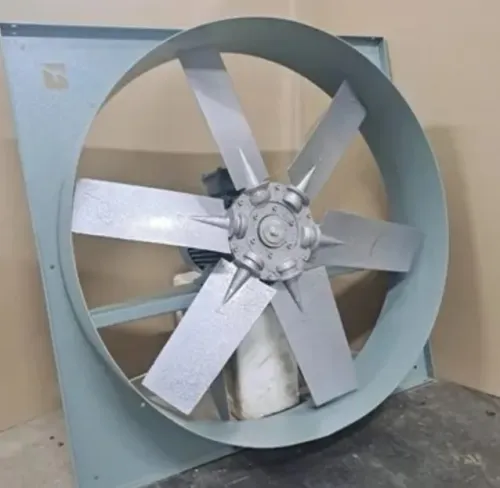
In a long bay, position a tunnel fan in Mumbai at one end to blow along the production line, with a defined exhaust path at the far end.
A tunnel fan inside the building does not remove heat by itself. Without replacement-air openings and an exhaust route, it only redistributes hot air; placing it beside an intake or roof outlet creates a short circuit.
- Keep intake openings away from the fan discharge and make their free area large enough to prevent throttling and excessive inlet velocity.
- Put roof exhausts over heat sources or at the highest roof points, but do not place them directly above nearby fresh-air inlets.
- Use adjustable louvers or dampers where wind direction changes, and provide rain protection for Mumbai’s monsoon conditions.
- Aim jets through the occupied zone, not at roof cladding, cranes, dust, or solvent fumes.
| Option | Best placement | Suits |
|---|---|---|
| Wind ventilator | High roof over hot, stratified air | Stack effect and usable wind |
| Tunnel fan | One end of a long bay, aimed toward remote exhaust | Stagnant zones and low-wind periods |
| Combined system | Low inlets, longitudinal fan flow, high roof exhaust | Heat removal plus worker-level air movement |
How to compare the installed and operating cost of each option
Compare the tunnel fan versus wind ventilator in Mumbai on delivered performance and lifetime cost, not fan diameter, rpm, or catalogue airflow. Require the supplier to price roof openings, structural steel, electrical cabling, controls, weather sealing, access equipment, and commissioning; these items can make a “free-air” ventilator costly to install.
| Option | Airflow control | Energy and service cost | Main cost risk |
|---|---|---|---|
| Tunnel-fan system | Guaranteed duty airflow at stated static pressure; staged or temperature-controlled | Motor electricity, bearings, belts, cleaning, noise and vibration checks | Undersized make-up openings or insufficient exhaust path |
| Wind ventilators | Wind- and stack-dependent airflow; no guaranteed peak-duty volume | No motor electricity; roof, bearing, corrosion and drainage maintenance | Fails to remove design heat during calm, humid weather |
| Combined installation | Powered exhaust covers peak load; natural exhaust reduces runtime | Electricity plus roof-equipment maintenance | Paying for overlapping capacity or poorly arranged airflow paths |
Put these requirements in the purchase specification:
- Airflow in m³/s or m³/h at the stated static pressure, with the test standard and tolerance.
- Sound power or sound-pressure level, motor efficiency, power input at duty, and annual operating hours used for cost comparison.
- Ingress-protection rating, operating-temperature range, vibration limit, corrosion treatment, compatible fasteners, drainage, bearing protection, and maintenance access for Mumbai’s salt-laden humidity.
- Make-up-air area, inlet velocity, roof penetrations, controls, interlocks, commissioning measurements, warranty, and spare-parts schedule.
For industrial heat removal in Mumbai, require a lifecycle-cost table covering installation, electricity, planned maintenance, replacement intervals, and downtime. Vayuvents Private Limited can help define one coordinated duty for roof exhaust, make-up openings, and controllable fans instead of pricing disconnected equipment.
Related products
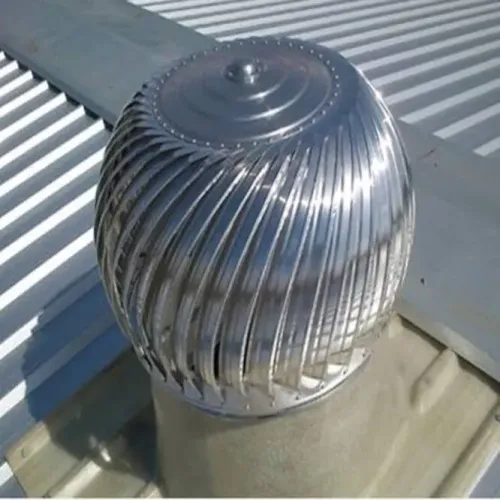
 | Wind Ventilators Manufacturer Powerless Ventilators work on the principle to draw fresh air inside and exhaust overheated and moisture-laden air. |
 | The efficiency of Conventional Ventilators is dependent on wind velocity. View product → |
Frequently asked questions
Does a tunnel fan remove heat from a factory?
A tunnel fan mainly increases air speed at worker level. It removes heat only when warm air can leave through exhausts or openings and replacement air can enter.
How does Mumbai weather affect tunnel fans and wind ventilators?
Mumbai’s humid, low-wind conditions reduce the cooling benefit of natural ventilation. Monsoon rain, wind direction, salt-laden air, and high outdoor humidity must be included in equipment placement and maintenance decisions.
How do you size airflow, make-up air, and the number of fans?
Calculate the heat load, select a target indoor condition and air-change or air-speed requirement, then size exhaust capacity and unobstructed make-up-air openings together. Divide the required airflow by each fan’s duty at the actual system resistance.
Where should factory fans, roof exhausts, and intake openings go?
Place exhausts near the highest heat and roof-level air, position tunnel fans along the intended worker-level airflow path, and provide intake openings on the opposite or cooler side without short-circuiting exhaust air.
Which costs less: a tunnel fan or a wind ventilator?
Compare the complete installed system, including structural work, make-up-air openings, electrical cabling, controls, roof sealing, access equipment, maintenance, and monsoon protection—not just the fan or ventilator purchase price.
Related products
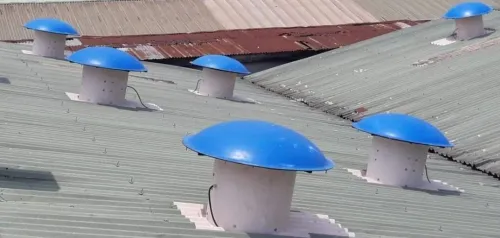
 | Get A Clean Environment With Electrically Operated Roof Extractor Fan Electrically Operated Roof Extractor Fan is a device that takes in air from... View product → |
 | Electric Roof Top Ventilator Vayuvents Private Limited is India’s leading Industrial Electric Ventilator exporters. |