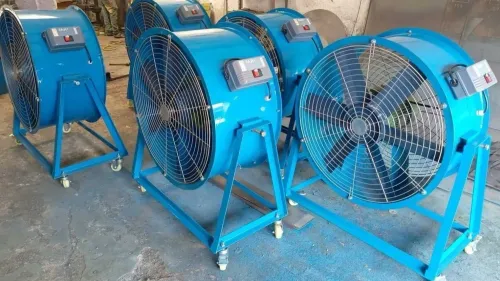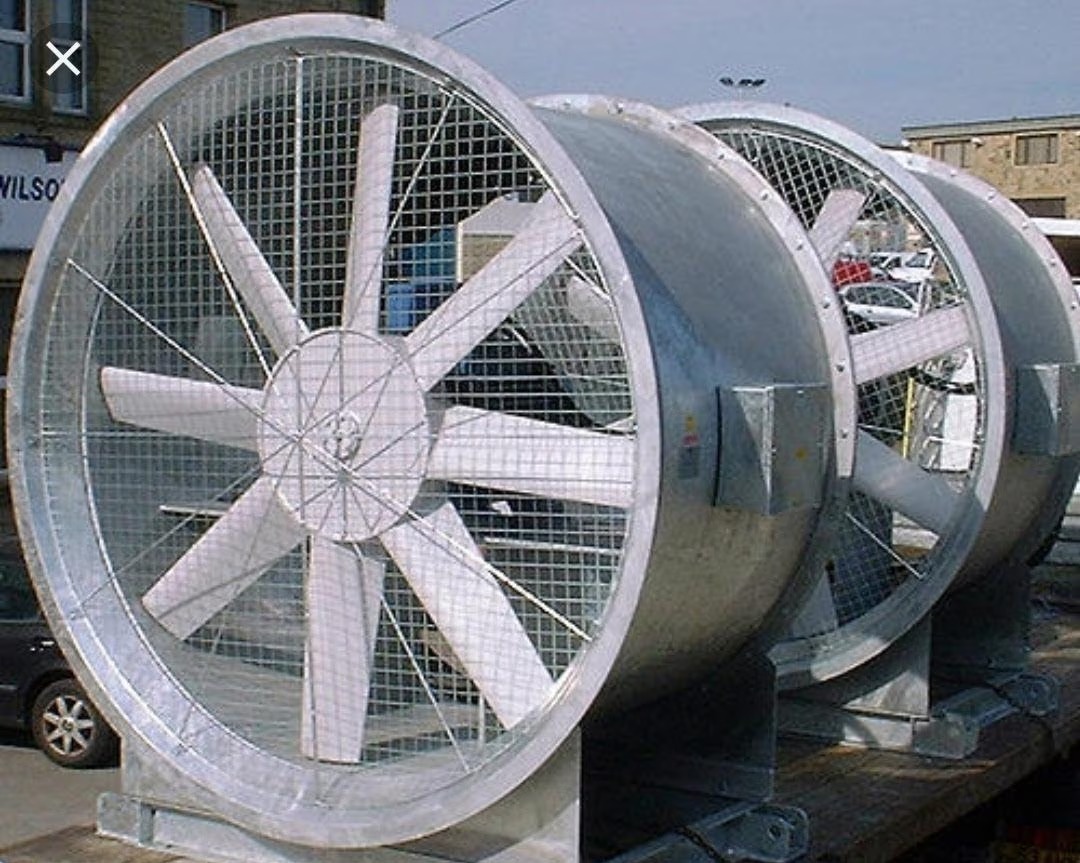
An Axial Fan moves air parallel to the shaft around which its blades rotate. This straightforward airflow pattern allows axial fans to move relatively large volumes of air, making them useful for ventilation, cooling and air circulation across a wide range of industrial environments.
Factories, warehouses, workshops and commercial facilities in Mumbai often deal with heat accumulation, limited natural ventilation and densely occupied production areas. Axial fans can help improve air movement when they are correctly sized and positioned.
However, fan diameter alone does not determine whether a particular model will work effectively.
The first consideration is required airflow. A large industrial area may require substantial air changes to remove accumulated heat or stale air. The required capacity depends on factors such as room dimensions, process heat generation, occupancy and existing ventilation openings.
Static pressure is another important factor. Axial fans generally perform well where large airflow is needed against relatively low resistance. If the system includes long ducts, numerous bends or restrictive filters, the pressure requirement may change significantly. Understanding the complete airflow path helps prevent poor fan performance after installation.
Industrial buyers should also consider:
Operating temperature
Humidity and moisture exposure
Dust concentration
Required fan speed
Noise limits
Installation position
Motor specifications
Continuous or intermittent operation
Fan placement can have a major effect on ventilation performance. Installing several fans without studying inlet and outlet airflow may create short-circuiting, where fresh air leaves the space before reaching the areas that actually need ventilation.
In Maharashtra's industrial facilities, axial fans may be installed for machinery cooling, workshop ventilation, warehouse air circulation, equipment rooms and general exhaust applications. Each requirement calls for a different evaluation.
Blade design and construction material also matter. The operating environment determines whether the fan requires specific materials, protective coatings or other design considerations. Equipment installed in a relatively clean warehouse does not face the same conditions as a fan working around process contaminants.
Maintenance accessibility should be planned from the beginning. Dust accumulation on fan blades can affect balance and performance. Bearings, motors, mounting hardware and guards should therefore remain accessible for periodic inspection.
Energy use becomes especially important when multiple fans operate for extended shifts. Instead of automatically choosing a larger unit, businesses should identify the airflow actually required and select equipment that operates efficiently around that point.
For Mumbai businesses evaluating industrial ventilation, understanding these parameters makes it easier to discuss requirements with manufacturers such as Vayuvents Private Limited.
An axial fan can appear to be a simple piece of equipment, but its performance depends heavily on selection and installation. Correct airflow calculations, sensible placement and consideration of the surrounding environment help create a ventilation arrangement that works consistently rather than merely moving air near the fan itself.