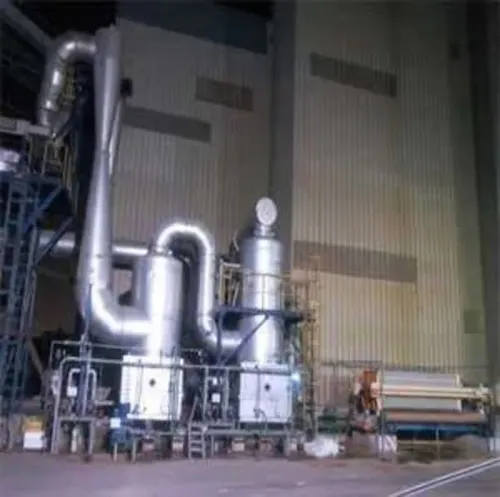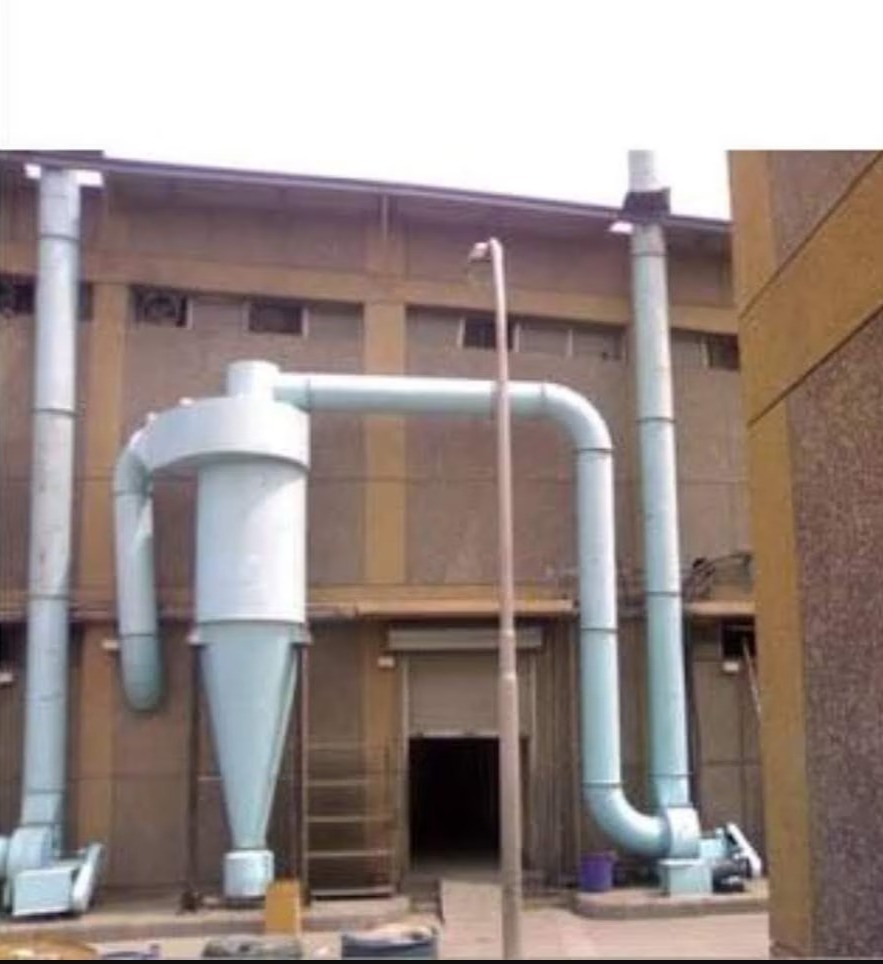
Dust generated during manufacturing, cutting, grinding, handling and processing can affect equipment, housekeeping and overall working conditions. A Cyclone Dust Collector offers a mechanical method of separating particulate matter from an air stream before the air proceeds to another stage of a dust-control system.
Unlike filtration systems that primarily depend on filter media, a cyclone uses centrifugal action.
Dust-laden air enters the cyclone and begins rotating inside its cylindrical and conical body. As the air spins, heavier particles are pushed toward the outer wall. They lose momentum, move downward and collect at the bottom, while the separated air exits through the upper section.
This relatively simple principle makes cyclone separators useful in many industrial applications.
Common applications can include:
Woodworking dust
Powder processing
Metalworking particles
Grain and agricultural material handling
Cement and mineral processing
Manufacturing operations
Pre-separation before filtration equipment
One major advantage is that a cyclone can reduce the quantity of larger particles reaching downstream equipment. In systems that also use filters, this pre-separation may help reduce the dust load placed on those filters.
However, a cyclone should not automatically be treated as a complete solution for every type of industrial dust. Separation efficiency depends considerably on particle size, density, airflow and cyclone design. Very fine particles may behave differently from larger, heavier material.
This is why businesses should first understand the dust generated by their process.
Mumbai and Maharashtra have a broad manufacturing base, with facilities operating under very different production conditions. A cyclone suitable for one process may not provide the same performance in another facility simply because both applications involve "dust."
Airflow is especially important. The cyclone needs sufficient velocity to create the rotational movement required for separation. At the same time, excessive pressure loss can increase the energy required by the associated blower.
Duct design also influences overall system performance. Sharp bends, poor transitions, leakage and incorrect duct sizing can change airflow before the dust even reaches the collector.
Dust discharge arrangements deserve equal attention. Collected material needs to leave the cyclone without allowing significant uncontrolled air leakage into the system. Depending on the application, a collection drum, rotary valve or other discharge arrangement may be considered.
Vayuvents Private Limited supports industrial air handling and pollution-control requirements for businesses in Mumbai. When evaluating a Cyclone Dust Collector, providing information about dust type, particle characteristics, airflow and process conditions can help establish a more suitable system configuration.
Routine inspection remains important even though cyclone collectors have a relatively straightforward operating principle. Internal wear, dust accumulation, leakage and discharge blockages can affect performance over time.
Cyclone separation works best when treated as an engineered part of the overall dust-management system. Understanding particle behaviour, airflow requirements and downstream equipment helps businesses determine where a cyclone can provide practical value and where additional filtration or extraction stages may be required.