Mushroom cultivation requires careful management of the growing environment. Temperature, humidity, carbon dioxide levels and air movement can influence crop conditions, making ventilation an important part of facility planning.
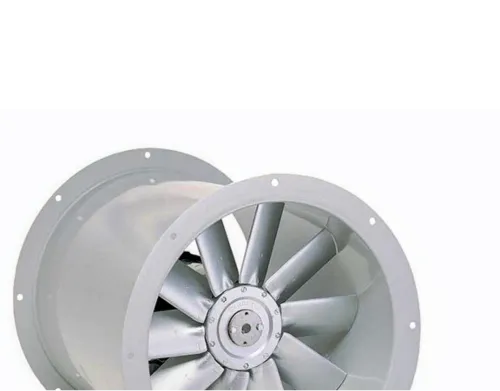
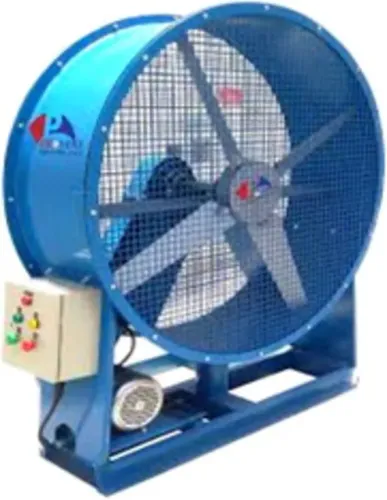
A Mushroom Ventilator, sometimes searched for as a mashroom ventilator, should therefore be selected according to the room, cultivation stage and environmental control strategy rather than simply by fan size.
For commercial growers and controlled-environment facilities around Bengaluru and Karnataka, several readiness indicators should be assessed before finalising a ventilation arrangement.
Know the Growing Room Volume
Room dimensions provide the starting point for airflow planning.
Length, width and height determine the approximate air volume, but room size alone does not establish the final ventilation requirement. The number of growing racks, crop load and room configuration also affect air distribution.
A densely arranged growing room may require more careful airflow planning than an open room of the same dimensions.
Understand Fresh-Air Requirements
Mushrooms produce carbon dioxide through respiration. Appropriate fresh-air exchange can therefore become important depending on the cultivation stage and species.
The ventilation arrangement needs to remove stale air while introducing conditioned fresh air in a controlled manner.
Uncontrolled ventilation can create its own problems because outside air conditions in Bengaluru change with weather and season.
Avoid Direct, Uneven Airflow
High air velocity directly across growing surfaces may create undesirable local conditions. The objective is not simply to move as much air as possible.
Air should be distributed so that different areas of the growing room receive suitable circulation without creating excessive drafts.
Duct layout, supply points, return-air positioning and fan selection all contribute to this balance.
Consider Humidity and Equipment Conditions
Mushroom facilities often operate at relatively high humidity. Fans, motors and associated components should therefore be selected with the operating environment in mind.
Condensation, corrosion and moisture exposure need to be considered when choosing equipment and planning maintenance.
Information to Prepare Before Selecting a Ventilator
A supplier can evaluate the requirement more accurately when the grower provides:
Growing room dimensions
Number and arrangement of racks
Mushroom variety
Cultivation stage
Desired temperature range
Desired humidity range
Existing cooling or conditioning equipment
Fresh-air arrangement
Exhaust arrangement
Operating schedule
These details are more useful than requesting a fan according to room area alone.
Why Controls Matter
Ventilation in controlled growing environments may need to respond to changing room conditions.
Where suitable, sensors and controls can help coordinate ventilation with temperature, humidity and carbon dioxide management. The specific control strategy should reflect the cultivation process and facility design.
Selecting a Ventilation Provider in Bengaluru
Commercial cultivation facilities need ventilation equipment that fits into the broader environmental control arrangement. Equipment selection should therefore consider airflow performance as well as installation, moisture exposure and control requirements.
Vayuvents Private Limited supports ventilation applications in Bengaluru where airflow needs to be matched to specialised operating environments.
Before selecting a mushroom ventilator, growers should have a clear understanding of room dimensions, crop arrangement and environmental targets. A provider that asks for these details is better positioned to evaluate the application than one selecting equipment only by fan diameter.
For Bengaluru growers, properly planned ventilation can form an important part of maintaining a controlled growing environment while allowing the overall temperature, humidity and fresh-air system to operate as intended.