A wind-driven ventilator and a powered parking fan solve different problems: one depends on available wind and pressure paths, while the other uses electricity to deliver a defined airflow. By the end, you can match the system to your parking structure, compare its real operating requirements, and identify the design details that determine whether exhaust is actually controlled.
Key takeaways
- Use wind ventilators only where permanent openings support airflow.
- Test carbon monoxide levels before relying on natural ventilation.
- Specify airflow, extraction, controls, noise, power, and standby capacity.
- Choose jet fans and sensors when airflow paths or pollutant risks are complex.
Which option fits your type of car park?
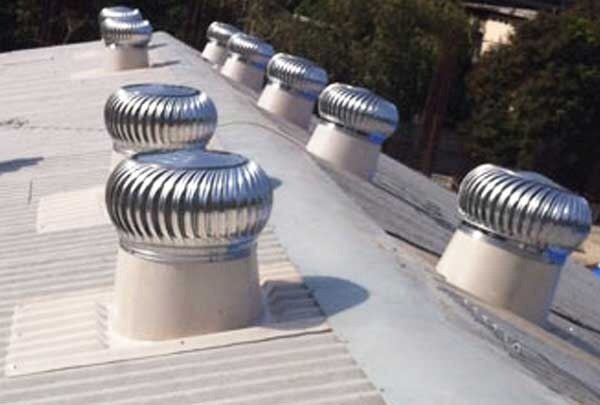
Start with the enclosure, not the equipment. The right car parking ventilation options depend on permanent openings, airflow paths, pollutant risk, and whether ventilation must work during calm weather. A roof turbine cannot turn a closed structure into an open parking facility.
| Area | Wind roof ventilator | Powered fan |
|---|---|---|
| Open-sided | Consider it for background air movement only after wall-opening geometry meets the authority’s definition of open parking. | Use it where ramps, corners, or vehicle queues create stagnant zones. |
| Semi-enclosed | Suitable as part of a natural or hybrid scheme if wind exposure and inlet paths support the required airflow. | Better for predictable extraction during peak movement, low wind, or high heat. |
| Basement | Do not rely on it; underground levels lack dependable wind and stack driving force. | Use mechanical extract with make-up air, pollutant controls, alarms, and a defined failure response. |
| Fully enclosed | Usually unsuitable as the sole system because calm conditions can leave exhaust trapped. | Select fans for controlled extraction, standby capacity, emergency power, and smoke-control boundaries where required. |
A valid wind roof ventilator comparison states airflow at a defined wind speed and pressure. Do not compare a turbine’s free-air claim with a car parking fan’s duty airflow at resistance from ducts, grilles, dampers, and roof terminals.
Compare annual electricity, noise, maintenance, and low-wind performance too; a motor uses power, but speed control and sensors prevent needless running.
How do you test whether natural ventilation is enough?
Start with the worst credible condition: calm or sheltered weather, not a breezy afternoon. A wind roof ventilator’s driving pressure falls sharply as wind speed drops, while output also changes with wind direction, stack temperature, internal pressure, weather capping, and inlet resistance.
Check the site in this order:
- Map permanent wall openings, ramps, doors, and louvres. Confirm their size, distribution, number of open sides, and unobstructed path to the roof outlet; a turbine cannot replace code-required geometry without approval from the authority having jurisdiction.
- Trace the air path on the plan. Replacement air must reach parking bays and vehicle-emission zones, not pass directly from a façade grille to the roof. Mark blocked corners behind walls, beams, storage, or dense vehicle rows.
- Record ceiling height, level connections, ramp locations, and parking geometry. These reveal pockets where air can settle even when the roof outlet is extracting.
- Test with smoke or theatrical fog at ramps, louvres, corners, and occupied bays. Watch for recirculation, still pockets, and a short-circuit path straight to the ventilator.
- Log wind speed and direction at roof level and at openings, then repeat during calm conditions. Measure carbon monoxide and nitrogen dioxide during peak vehicle movement; inspect heat and odour accumulation separately.
- Treat persistent stagnant zones or pollutant rises as a failure, not an averaging problem. Add powered extraction or supply air rather than relying on a favourable weather reading.
For a defensible wind roof ventilator comparison, record airflow at stated wind speed and pressure. Do not compare a free-air rating with a powered fan’s duty point when choosing car parking ventilation options.
What airflow and exhaust controls does the garage need?
Size the system for pollutant removal, not just heat. Carbon monoxide and nitrogen dioxide need sensor-controlled extraction; diesel particulate matter needs dilution and, where required, filtration, while odour and heat add separate loads. A roof ventilation fan for parking must deliver its required airflow at the actual duty point, not its free-air rating.
- Calculate airflow from vehicle activity, garage volume, occupancy, contaminant risk, heat load, and the applicable code or exposure limit. Do not use one universal ppm setpoint.
- Add pressure loss through grilles, louvers, filters, ducts, dampers, roof terminals, and discharge fittings. Select the fan from its performance curve at that combined resistance.
- Provide a defined make-up-air route through ramps, wall openings, louvers, shafts, or supply fans. Extraction without replacement air depressurises the garage and leaves stagnant pockets.
- Zone carbon-monoxide and nitrogen-dioxide sensors away from ramps, roof outlets, and directly supplied air. Specify calibration, response time, alarm levels, fan staging, and sensor-failure alarms.
- Match the car parking ventilation options to the vehicle mix. Diesel-heavy traffic raises nitrogen-dioxide and particulate concerns that a carbon-monoxide-only system can miss.
- Specify fault response for fan failure, power failure, sensor failure, and communications loss. Use standby fans, emergency power, manual override, or alarm transmission when the occupancy, code classification, or smoke-control role requires them.
- Treat a wind ventilator as weather-dependent relief, not guaranteed extraction. It does not make a garage legally open or naturally ventilated, and it cannot replace powered equipment when peak traffic demands controlled airflow.
When do sensors, jet fans, ducts, and standby equipment change the decision?
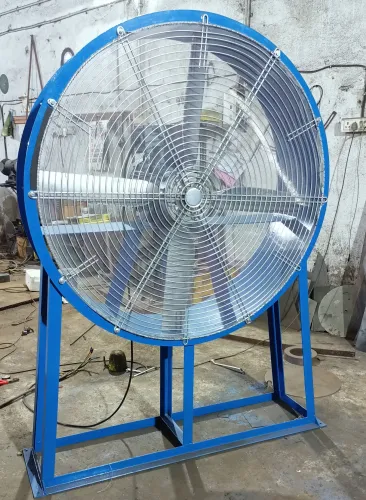
Choose the system by airflow path and failure consequence: a roof ventilation fan for parking suits defined extraction, while jet fans only move air toward approved exhaust or relief openings.
| Option | Best fit | Main limitation |
|---|---|---|
| Roof extract fan | Basement or enclosed levels with ducts or shafts | Needs duty/standby capacity, discharge protection, and make-up air |
| Ducted fans | Multiple levels, remote exhaust points, controlled zones | Pressure loss, fire-rated ducts, dampers, and balancing add cost |
| Wall fans | Short, open-sided routes with opposing openings | Dead zones form behind columns, ramps, and solid walls |
| Jet fans | Large enclosed floors needing zoned impulse airflow | Not an exhaust system; requires validated thrust, openings, and smoke mode |
| Natural shafts or wind ventilators | Open or semi-enclosed areas with verified openings and wind exposure | Weak control during low wind; a wind roof ventilator does not create code-compliant open parking by itself |
| Hybrid systems | Variable occupancy, mixed levels, or energy-sensitive operation | More controls and failure interactions to commission |
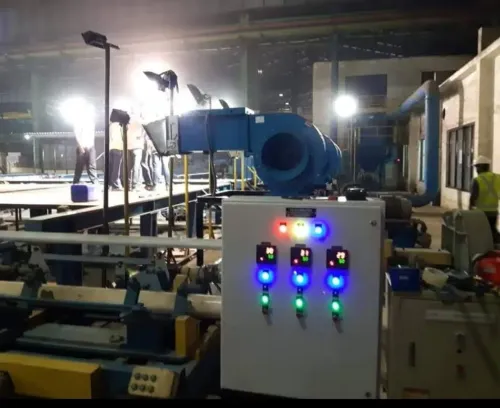
Install CO and NO2 sensors by level and zone, then stage fans or vary speed against measured concentrations and schedules. A car parking fan should report fan, sensor, power, and communications faults; define the response to each fault, including standby start, alarm transmission, manual override, and emergency-power operation.
Do not count normal extract capacity as smoke control. If fire strategy requires smoke management, separate the smoke boundaries, dampers, cabling, controls, fan ratings, and protected power supplies, then obtain approval for that mode. Jet fans and hybrid systems need full-scale or computational validation of airflow paths; a large motor alone proves nothing.
What should you specify before selecting a supplier or installer?
Put the equipment specification before requesting prices: state airflow at the occupied-zone design condition, pollutant-control objective, operating hours, and allowable noise. A roof ventilation fan for parking must be selected at its actual system duty point, including grilles, louvers, filters, ducts, dampers, roof terminals, and discharge fittings.
| Option | Specify for comparison | Do not accept |
|---|---|---|
| Wind roof ventilator | Tested airflow at stated wind speed, wind direction, pressure, temperature, and inlet resistance; reverse-flow behaviour when idle | Throat diameter, unit count, or maximum free-air capacity alone |
| Powered roof fan | Airflow and pressure on the fan curve at the calculated duty point, motor rating, speed control, sound level, and standby arrangement | A free-air rating compared with the turbine’s duty airflow |
Require the installer to document:
- Roof loading, wind uplift restraint, flashing, drainage, access, bearing or shaft servicing, and protection against rain, snow or ice, corrosion, birds, and insects.
- Inlet area and distribution through ramps, doors, façade grilles, or supply fans, so replacement air reaches vehicle-emission zones instead of short-circuiting to the outlet.
- CO and NO2 sensor locations, alarm levels, fan staging, manual override, power-failure response, and separation from smoke-management controls.
- Commissioning measurements: airflow at each outlet, pressure, noise, sensor calibration, fan rotation, damper operation, standby transfer, and reverse flow. Require signed test records and as-built drawings.
- For a wind roof ventilator comparison, Vayuvents Private Limited should provide the test conditions and duty curve, not only a catalogue capacity.
Related products
 | Roof Ventilator Electric Roof Top Ventilator Vayuvents Private Limited is India’s leading Industrial Electric Ventilator exporters. |
 | Roof Ventilator Motorized Roof Ventilation Fans Vayuvents Private Limited manufacturing and exporting high quality Motorized Roof Exhaust Fans worldwide. |
Frequently asked questions
Which option fits my type of car park?
A wind roof ventilator suits an open-sided car park with permanent openings and reliable cross-flow. A powered roof ventilation fan suits enclosed or basement parking where fans must move air during calm weather.
How do I test whether natural ventilation is enough?
Map permanent openings and airflow paths, then measure carbon monoxide concentrations at occupied levels during peak vehicle movement and calm conditions. Compare the readings with the limits set by your local building and fire authorities.
What airflow and exhaust controls does a garage need?
Specify the required air changes or exhaust flow, extract locations, make-up air paths, fan duty, carbon monoxide monitoring, alarms, manual override, and fire-system interlocks.
When do sensors, jet fans, ducts, and standby equipment change the decision?
Use sensors and demand-controlled fans when pollutant levels vary. Add jet fans when you need to direct air toward extract points, ducts when source capture or controlled discharge matters, and standby equipment when ventilation must operate during power or fan failure.
Related products
 | The efficiency of Conventional Ventilators is dependent on wind velocity. View product → |
 | Roof Ventilator Get A Clean Environment With Electrically Operated Roof Extractor Fan Electrically Operated Roof Extractor Fan is a device that takes in air from... View product → |
 | Wind Ventilators Manufacturer Powerless Ventilators work on the principle to draw fresh air inside and exhaust overheated and moisture-laden air. |