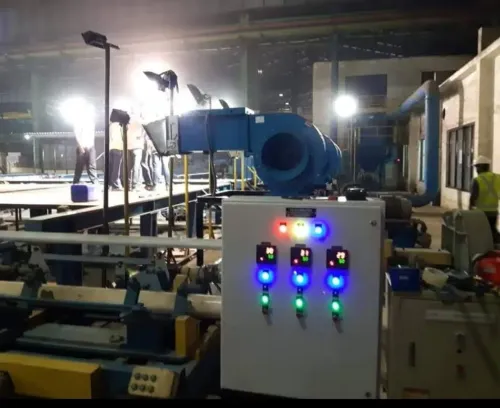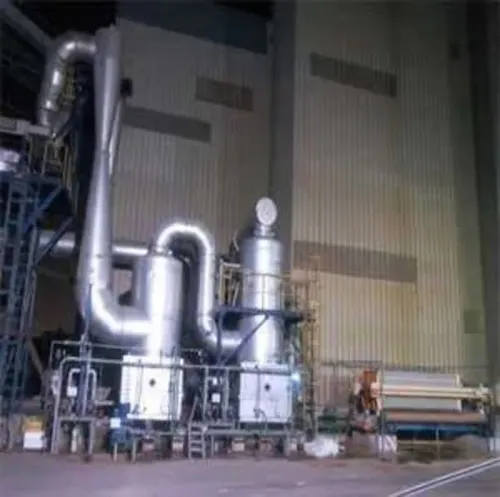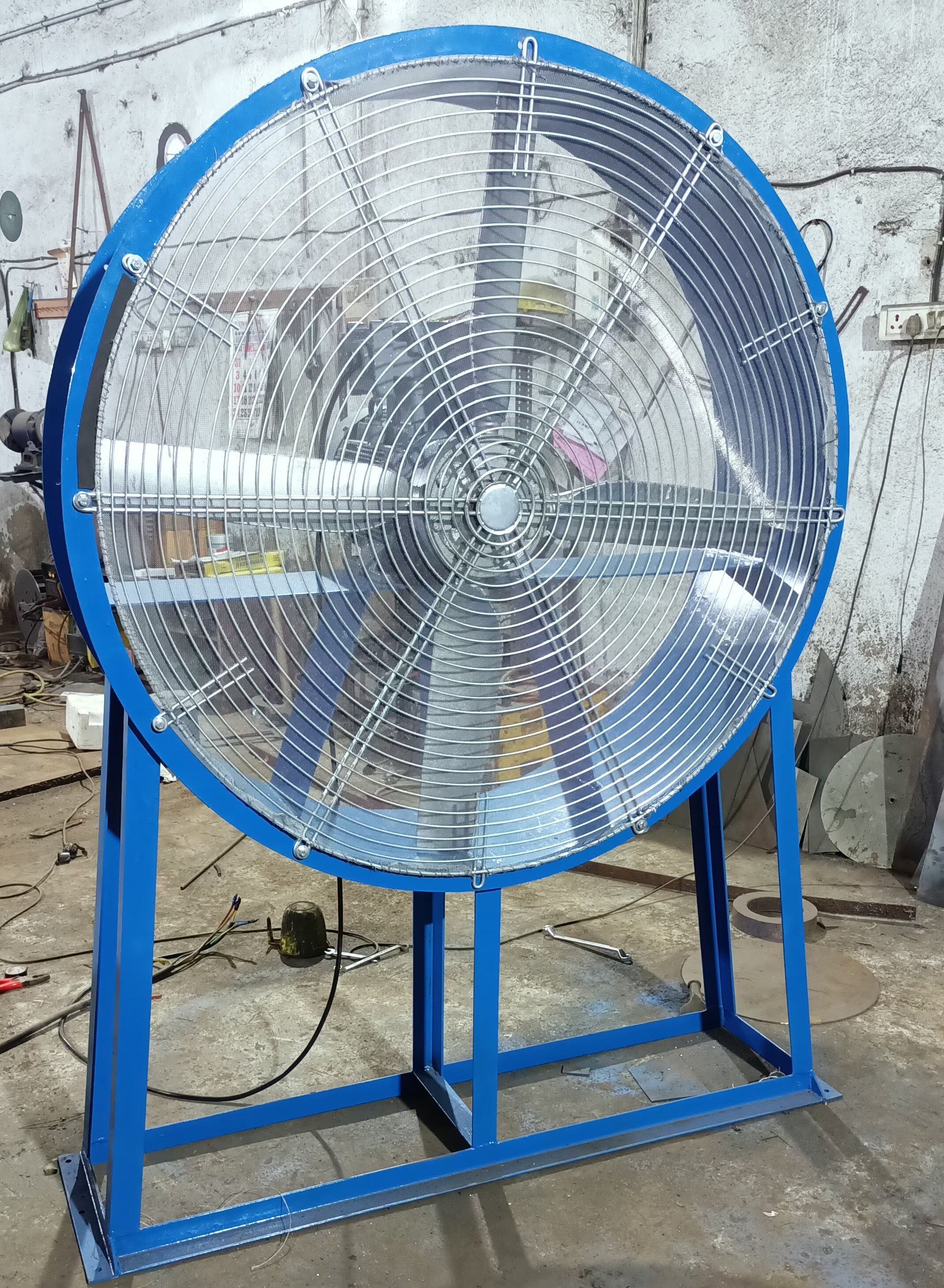
A tubular mancooler fan moves air; it does not pump water, atomize droplets, or capture dust on its own. To decide whether it belongs in an anti-smog gun setup, you need to match airflow, pressure, spray behaviour, operating conditions, and safety controls rather than compare motor horsepower alone.
Key takeaways
- Keep the fan outside the mist plume to preserve droplet size and spray coverage.
- Size airflow, static pressure, and throw from the cannon’s operating conditions.
- Specify weatherproof motors, guarded intakes, earthing, and electrical protection.
- Test fan performance, spray pattern, pump pressure, and controls as one system.
What an anti-smog gun needs from a tubular mancooler fan
An anti smog gun, fog cannon, and water mist cannon generate and project water droplets; a tubular mancooler fan only moves air. An anti smog gun equipment package combines a pump, water filtration, atomizing nozzles, spray boom, elevation mechanism, and air-moving assembly.
| Machine | Primary job | What it supplies |
|---|---|---|
| Anti-smog gun | Dust suppression | Filtered water, atomized droplets, and directed air |
| Fog cannon | Droplet projection | A water mist carried toward a target |
| Water mist cannon | Wetting airborne or fugitive particulate | Water coverage over a defined area |
| Tubular mancooler fan | Air movement | High-volume air with no water or filtration |
Choose the operating objective before choosing the fan. Plume dispersion and exhaust dilution need directed air away from people; worker cooling needs air velocity across the body; general air circulation needs room-wide mixing. Dust suppression needs droplet contact, capture efficiency, controlled water use, and drainage.
Water suppression targets airborne or fugitive particulate, not every emission problem. Coarse construction dust and road dust respond differently from ash; smoke and fine combustion aerosol can remain airborne or pass around droplets. Use source enclosure, local exhaust ventilation, filtration, and legally required emission controls where the process requires them.
A tubular axial fan suits an open, short, low-resistance path requiring high volume at low-to-moderate pressure. Consider mixed-flow or centrifugal equipment when filters, ducts, silencers, or wet scrubber components create substantial pressure loss.
An industrial air circulation fan can cool workers by increasing air speed, but it does not remove dust; never confuse comfort airflow with pollution capture.
Where to place the fan without breaking the spray pattern
Choose the fan arrangement before changing nozzle pressure. A tubular mancooler fan in an anti-smog gun can either transport droplets or move ambient air independently; mixing those duties without testing can create apparent throw distance but poor dust capture.
| Arrangement | Fan position | Correct use |
|---|---|---|
| Upstream transport | Before the atomizing nozzles | Align the discharge with the spray axis and keep the air stream centred, never directed sideways into the nozzle bank. |
| Separate air movement | Away from the nozzle assembly | Move ambient air across a target plume without pushing directly through the spray. |
Compare the fan’s discharge cone with the nozzle spray angle, and keep guards and supports outside the wet plume. Excessive velocity can stretch the plume while increasing drift, evaporation, overspray, and resuspension of settled dust. Test the anti-smog gun equipment at its actual elevation and distance, not only at ground level.
Treat nozzle flow, droplet-size distribution, pump pressure, water coverage, wind speed, wind direction, humidity, temperature, and elevation angle as joint variables. “Mist” or “fog” proves nothing without droplet-size data and the measurement method used.
Run a field trial using visible plume alignment, downwind deposition, water consumption, and dust readings. Reject a still-air maximum-throw figure as a suppression guarantee; outdoor wind can move the plume away from the target before droplets capture particulate.
How to size airflow, pressure, and throw for the duty
Set the required air velocity at the occupied zone or dust plume first. Multiply that velocity by the target area to calculate airflow, then add pressure losses from the nozzle assembly, screen, duct, guard, and discharge path; convert the result to cubic metres per hour.
Select the mancooler fan where its fan curve intersects the system curve at that airflow and pressure. Treat throw as the distance at which the required velocity remains available, not as a free-air catalogue maximum.
- Ask for one operating-point schedule showing airflow in cubic metres per hour, static pressure in pascals, discharge velocity, fan diameter, rotational speed, absorbed power, efficiency, sound level, throw distance, and duty cycle.
- Confirm whether pressure is static or total, whether airflow is free-air or measured at a defined pressure, and whether testing follows AMCA 210.
- Reject comparisons based only on motor horsepower or free-air CFM; those figures can conceal poor loaded performance.
| Quoted basis | What it means | Comparison risk |
|---|---|---|
| Free-air airflow | Flow with negligible system resistance | Overstates field delivery |
| Airflow at defined pressure | Flow measured against stated resistance | Usable for sizing |
| Static pressure | Pressure available to overcome system losses | Use with the system curve |
| Total pressure | Static pressure plus velocity pressure | Do not compare directly with static pressure |
A larger industrial air circulation fan is not automatically better: excessive velocity can disturb droplets, resuspend dust, increase noise, and waste energy. Variable-frequency control belongs in the mancooler fan selection only when the motor, drive, minimum speed, cooling, and ramp settings support it; running too slowly can leave the spray without enough transport energy.
What the fan and electrical system must withstand outdoors
A tubular mancooler is suitable outdoors only after you define the air and weather it will face: clean ambient air, wet spray, abrasive dust, saline Mumbai air, fumes, or contaminated exhaust. A clean-air circulation rating does not prove compatibility with any of these conditions.
Treat tubular mancooler fan anti smog gun duty as process service, not ordinary spot cooling.
1. Put the motor enclosure, IP rating, insulation class, duty class, ambient-temperature limit, phase, voltage, overload protection, earthing, cable protection, control method, and emergency isolation in the purchase specification. IP rating alone does not prove resistance to corrosive spray, abrasive dust, or continuous water exposure; check materials, seals, coatings, and panel construction.
2. Inspect fan-guard spacing, impeller balance, wheel brakes, lifting points, cable routing, restart behaviour, drainage after washdown, and electrical-panel sealing. Position the fan so water lines cannot leak onto the motor or controls, use a protected cable route, and isolate power before adjustment or relocation.
3. Complete the mancooler fan selection review with noise, maintenance access, and duty cycle. For continuous operation, confirm replacement arrangements for bearings, impeller, motor, guard, and wheels; portability is not a maintenance plan.
Ask for a documented earthing and overload test, and confirm that the control system prevents unexpected restart after power returns. A fan that survives rain but cannot be safely isolated or serviced remains unsuitable for the site.
How to specify, test, and buy the complete anti-smog setup
Buy the anti smog gun equipment as one tested system, not as a fan, pump, and nozzle package assembled from unrelated catalogue figures. Your mancooler fan selection must state the objective: suppression, dispersion, cooling, dilution, or circulation.
1. Require one coordinated submittal covering the fan curve, airflow, static and total pressure, nozzle flow, pump pressure, droplet-size distribution and measurement method, spray angle, water filtration, coverage area, elevation range, controls, and expected performance at stated wind speed, direction, humidity, temperature, and elevation.
2. Ask the tubular mancooler fan supplier in Mumbai to demonstrate the complete fan-and-spray arrangement at the intended duty point. Reject a comparison based only on free-air CFM, motor rating, or maximum throw.
3. Record commissioning results for airflow, pressure, motor input, sound level, water consumption, plume reach, downwind drift, and dust reduction. Note the fan’s measured operating duty, not merely its nominal motor size.
4. Confirm local availability of replacement motors, bearings, impellers, guards, wheels, filters, nozzles, pump parts, and control components. For Mumbai service, specify humid and saline-air protection, corrosion-resistant materials, post-washdown drainage, sealed panels, and commissioning support.
5. Obtain instructions for nozzle cleaning, filter inspection, emergency isolation, restart behaviour, and seasonal adjustment. Vayuvents Private Limited can use this information to configure and commission the air-moving portion without treating the tubular fan as the complete anti-smog gun.
If the supplier cannot show performance under the intended weather and duty conditions, defer purchase until a field trial produces defensible measurements.
Frequently asked questions
Where should you place a tubular mancooler fan near an anti-smog gun?
Place it beside or behind the cannon’s airflow path, outside the direct spray plume, so it supports dispersion without disturbing the droplet pattern.
How do you size a tubular mancooler fan for anti-smog operations?
Match airflow, static pressure, and throw to the required coverage area, nozzle output, wind conditions, and any duct, grille, or guard resistance.
What outdoor features should an anti-smog gun fan have?
Specify a weather-protected motor, corrosion-resistant construction, an inlet guard, reliable earthing, overload protection, and an enclosure suited to the installation environment.
What should you test before buying a complete anti-smog gun setup?
Check fan airflow and throw, pump pressure, filtration, nozzle operation, spray pattern, elevation controls, electrical protection, and coordinated operation under site conditions.