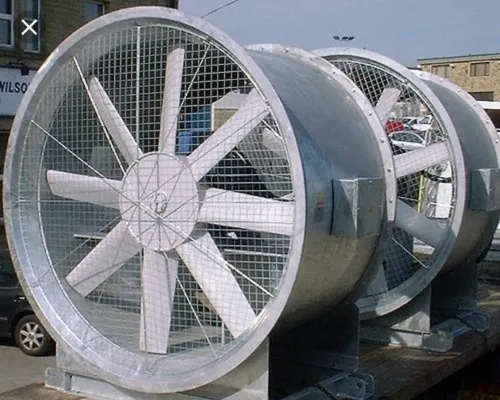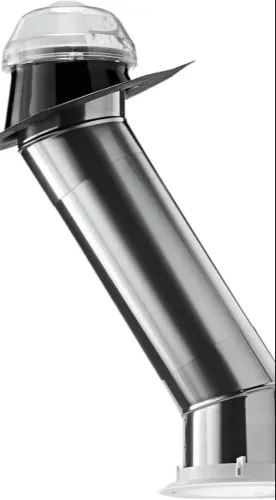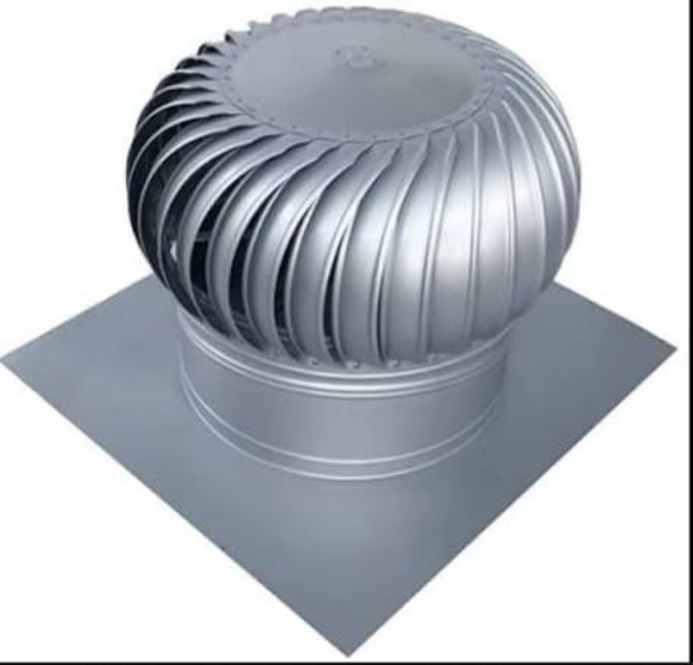
Heat naturally rises inside factories, warehouses and production sheds. When that hot air remains trapped near the roof, indoor temperatures can increase and working conditions may become uncomfortable. A Roof Ventilator Fan provides a direct route for extracting accumulated warm air from the upper section of a building.
This makes roof-level ventilation particularly relevant to industrial facilities where machinery, manufacturing processes, lighting or solar heat gain continuously increase indoor temperature.
Mumbai's climate adds another consideration. High humidity combined with warm conditions can make poorly ventilated industrial spaces uncomfortable even when the measured temperature does not appear extreme. Effective air exchange can therefore be an important part of building ventilation planning.
Roof ventilator fans are generally used to remove hot or stale air while allowing replacement air to enter through appropriately positioned openings elsewhere in the building. For this arrangement to work effectively, both exhaust and make-up air need consideration.
Simply installing an exhaust fan on the roof without sufficient replacement air can reduce actual ventilation performance.
Before choosing a roof ventilation system, facility managers should examine several factors:
Building volume: Larger sheds require greater airflow to achieve the desired number of air changes.
Heat generation: Welding, furnaces, machinery and other industrial processes may produce significant heat.
Roof height: High ceilings influence the volume of air that needs to be managed.
Fresh-air openings: Louvers, doors and other openings affect how replacement air enters the building.
Weather exposure: Roof-mounted equipment needs to withstand rain, wind and local environmental conditions.
The location of the fans is equally important. Proper distribution can encourage air movement through the building instead of extracting air primarily from one small area.
Industrial facilities should also distinguish between general heat ventilation and source-specific extraction. If fumes, smoke or dust are generated by a particular process, a dedicated extraction system may be needed rather than relying entirely on roof ventilation.
Maintenance planning is another practical consideration. Roof equipment is often overlooked because it is away from normal working areas. Periodic inspection of fan blades, motors, mounting arrangements and weather protection can help identify deterioration before it causes operational problems.
Noise and vibration should also be assessed. Secure mounting and correct balancing contribute to reliable operation and reduce unnecessary structural vibration.
Vayuvents Private Limited works with industrial ventilation requirements in Mumbai and across Maharashtra, where roof ventilation may form part of a broader airflow strategy.
A well-designed Roof Ventilator Fan system does more than remove hot air directly above the equipment. When exhaust capacity, replacement air and fan placement are considered together, it can support better circulation throughout the building.
For facility managers planning ventilation improvements, the most useful starting point is to understand where heat originates, how air currently moves through the building and where it becomes trapped. These observations make it possible to design roof ventilation around actual conditions rather than simply adding more fans.